 Newsinc24 Team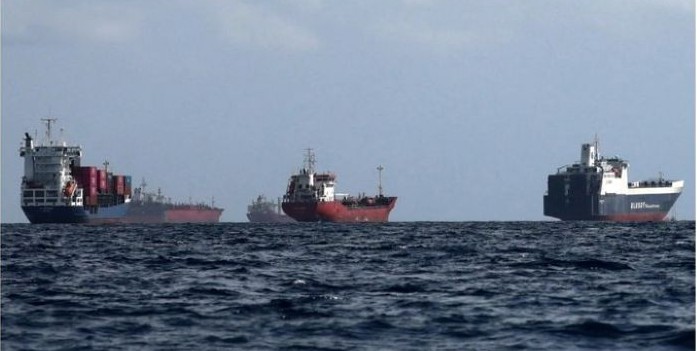
The United States has vowed what it described as its biggest-ever financial offensive against Iran, with new sanctions targeting countries and entities involved in Iran’s trade and financial system, while Tehran has threatened to halt all oil exports from the Gulf if the economic pressure continues, according to agency reports.
US Treasury Secretary Scott Bessent is scheduled to hold a press conference at 1 p.m. EDT (1700 GMT) on Monday, where he is expected to announce further measures against Iran. According to sources, Bessent described the planned action as an “economic D-Day” and “the single greatest financial offensive ever marshalled against an adversary.”The latest escalation comes despite the absence of direct military strikes between the United States and Iran for several weeks. The two sides have also not held meaningful negotiations to end the six-month-old conflict, according to agency reports.
The United States is entering the “endgame” of its confrontation with Iran,Tr easury Secretary Scott Bessent said Sunday, pledging to sever every remaining economic lifeline to Tehran in what he described as an “economic D-Day.”https://t.co/LoZVH6evIp pic.twitter.com/bajKIXNBq0
— Iran International English (@IranIntl_En) August 23, 2026
Iran, meanwhile, has threatened a sweeping response to the new sanctions. Mohsen Rezaei, secretary of Iran’s Supreme National Security Council, said on Sunday that Tehran could stop all oil exports if what he called the economic war against Iran continued.“If the economic war continues, not a single drop of oil will be exported, neither through the Strait of Hormuz nor from anywhere in the Persian Gulf,” Rezaei said in a social media post.
Iran will treat any country’s participation in or support for the US economic campaign against Tehran as an act of war and could halt all oil exports from the Persian Gulf, Secretary of Iran’s Supreme National Security Council Mohsen Rezaei said on Sunday.
— Iran International English (@IranIntl_En) August 23, 2026
“If the economic war… pic.twitter.com/z58w9uXMSb
He further warned that Iran would consider any country supporting or participating in the US economic campaign against Tehran as an “act of war.”The threat has raised concerns over global energy supplies, as the Strait of Hormuz is one of the world’s most important oil transit routes. Iran has retained missile and drone capabilities that could threaten Gulf shipping and oil tankers, while disruptions in the waterway have already put pressure on global fuel prices, according to agency reports.
Bessent did not provide details of the new sanctions but warned countries that continue economic and financial dealings with Iran despite US pressure. He said nations engaging with Iran’s economy should consider the consequences of what he described as “appeasement.”
The United States has also urged China to cooperate with its pressure campaign against Tehran. China, which has historically sourced a significant share of its oil imports from the Gulf region, has opposed the use of sanctions as a means of resolving the conflict.A spokesperson for the Chinese embassy in Washington said sanctions and pressure would not help resolve the crisis and called for diplomacy.
Iran's economy was already facing severe challenges before the latest conflict, including high inflation, a weakening currency, energy shortages, international sanctions and structural economic weaknesses. Damage to infrastructure, disruption to trade and lost production have added to the economic burden, while Tehran faces substantial reconstruction costs.Iranian officials have warned that additional economic pressure could deepen hardships, fuel public discontent and further weaken the Islamic Republic's legitimacy.
The escalation follows weeks of fighting in which US and Israeli strikes on Iran and Israeli attacks on Lebanon have reportedly killed thousands and displaced millions. The United States has reported 18 military personnel killed and more than 750 wounded.The status of Iran’s nuclear programme remains uncertain, while Washington and Israel continue to seek the dismantling of Tehran’s nuclear capabilities.With direct US-Iran talks stalled, countries including Qatar, Pakistan and Turkey have sought to facilitate diplomatic efforts. Iran said Pakistan’s army chief, General Asim Munir, would visit Tehran on Monday as part of efforts to restore peace and security in the region.A Pakistani government source said Munir’s visit would include discussions on recent developments, including Washington’s threat of additional sanctions against Iran.