 Newsinc24 Team
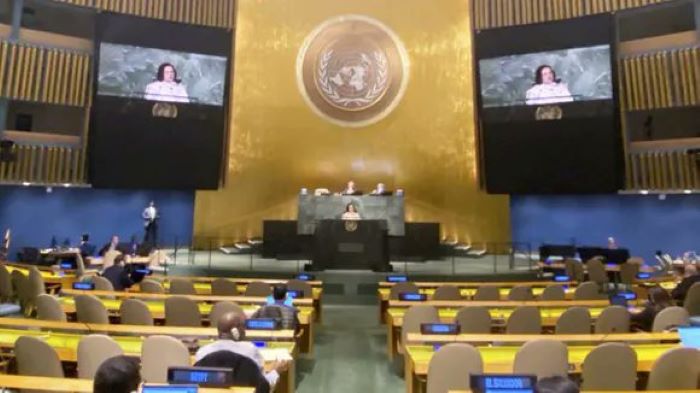
 The resolution passed by United Nations General Assembly on March 25, 2026 seeking recognition of the transatlantic slave trade as the “gravest crime against humanity” potentially creates a broader definition of crimes against humanity in international law and allows for restitution claims against perpetrators. The resolution could elevate the legal and moral standard for what counts as the worst crimes against humanity, and compel more people to legally pursue reparations or compensation cases and thus deter such crimes. Proposed by Ghana, it was adopted with 123 votes. The United States, Israel and Argentina voted against it. Fifty-two countries abstained, among them the UK and European states. Experts involved in drafting the resolution say it is an attempt to get “political recognition at the highest level” for one of the darkest eras in history.
Ghana said the resolution was needed because the consequences of slavery, which saw at least 12.5 million Africans abducted and sold between the 15th and 19th centuries, persist today, including racial disparities. Ghana’s President John Dramani Mahama, a key architect of the resolution, said the resolution’s passing was “a route to healing and reparative justice”. Ghana’s foreign minister, Samuel Ablakwa, said the resolution called for accountability and could pave the way for a “reparative framework”.
UN Secretary-General Antonio Guterres told the UNGA that “far bolder action” was required from more states to confront historical injustices. The Netherlands remains the only European country to have issued a formal apology for its role in slavery.Several Western leaders have opposed even discussing the subject, with critics arguing that today’s states and institutions should not be held responsible for historical wrongs. Both the EU and the US voiced concerns that the resolution could imply a hierarchy among crimes against humanity, treating some as more serious than others.
For four centuries, seven European nations including the UK enslaved and trafficked more than 15 million Africans across the Atlantic. The scale of the chattel slavery was such that 18th and 19th-century abolitionists coined the term “crime against humanity” to describe it. Historians have also linked wealth from enslavement to mass industrialisation in the west.
As the resolution went ahead in New York, the British MP Bell Ribeiro-Addy presented a petition to the House of Commons in UK , pushing for a state apology by the UK for its key role in slavery and colonialism of Africans. “So many of the intersecting global challenges we now face are rooted in the legacies of enslavement and empire: from geopolitical instability to racism, inequality, underdevelopment and climate breakdown,” the petition read. “To truly confront these issues, we must acknowledge where they come from.”












Related Items
Jaishankar, Luxembourg Dy PM Bettel discuss trade, investment ties
India votes in favour of UNGA resolution endorsing new world map
India, Belgium agree to double bilateral trade in next 5 years