 Uday Kumar Varma
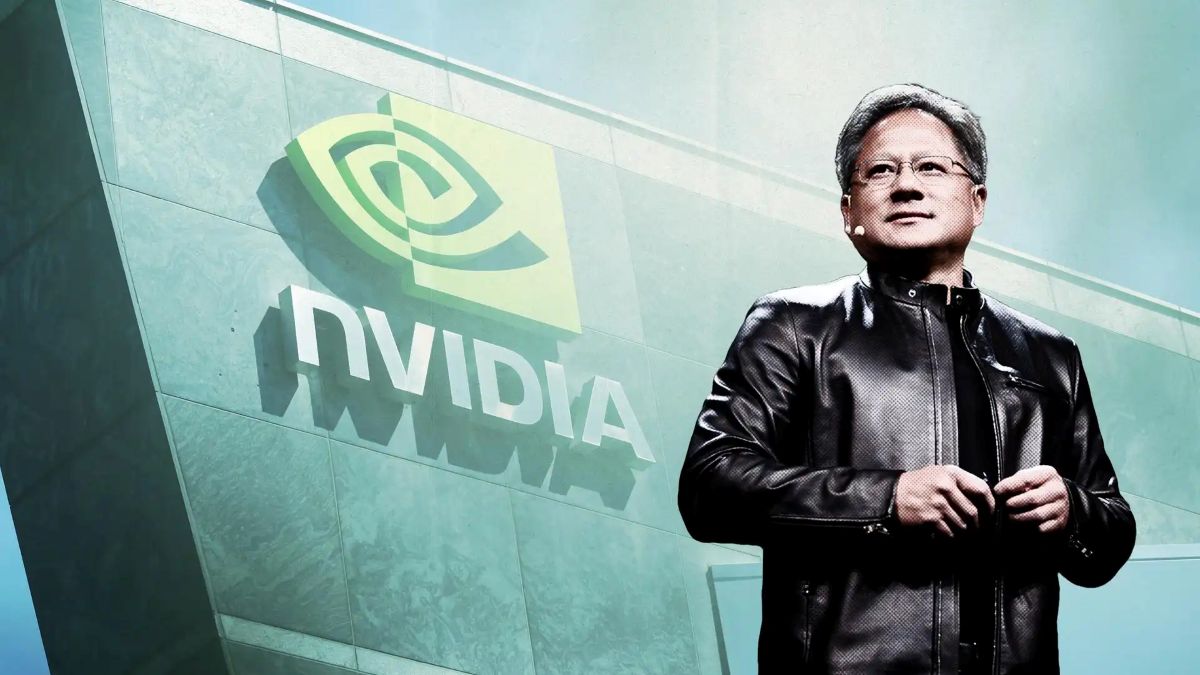
An extraordinary technological legacy, an abrupt personal fall, and the difficult business of separating the two.
History has never been short of remarkable men brought down by their private indiscretions. Emperors, kings, politicians, generals and artists have all discovered, sometimes rather late, that genius in one sphere does not necessarily confer wisdom in another. Jensen Huang has now joined that unhappy company. His departure from Nvidia, the technology giant he founded and led for 33 years, has been as dramatic as his rise. But it would be a mistake to allow the circumstances of his departure to become the defining story of his life.
Huang was no ordinary corporate chief executive. At thirty, in 1993, he founded Nvidia with two fellow engineers, Chris Malachowsky and Curtis Priem. Their initial ambition was relatively modest: to make better graphics processors for the emerging computer gaming industry. Few could have imagined that this venture would eventually place its products at the heart of the most consequential technological transformation of our times.
Seeing Beyond the Graphics
The first great act of foresight came in 1999, when Nvidia introduced the Graphics Processing Unit, or GPU. What appeared then to be a specialised processor for rendering images would eventually acquire an altogether different significance. Unlike conventional processors, which generally handle tasks sequentially, GPUs can perform enormous numbers of calculations simultaneously. Huang recognised that this capacity had applications far beyond computer graphics. It could transform scientific research, engineering, data processing and, eventually, artificial intelligence.
But recognising an opportunity and building a business around it are two very different things. Huang’s most consequential decision perhaps came in 2006, when Nvidia introduced CUDA, a software platform that allowed researchers and programmers to harness the parallel-processing capabilities of its GPUs. It was a remarkably patient investment. The immediate commercial returns were uncertain, and the world of computing had not yet discovered what it could do with this technology.
The vindication came in 2012. Researchers using Nvidia GPUs trained AlexNet, a neural network that achieved a breakthrough in image recognition. The significance of the achievement extended far beyond the competition it won. It demonstrated that GPUs could provide the computational power needed to advance deep learning. A new chapter in artificial intelligence had begun, and Nvidia had already laid much of its foundation.
Building an Ecosystem, Not Just a Business
This is where Huang’s genius as a businessman becomes particularly apparent. He did not simply build a company that manufactured increasingly powerful chips. He built an ecosystem around them. Hardware, software, networking, computing systems, research facilities and a worldwide community of developers became parts of an integrated platform. Customers were no longer merely buying processors; they were investing in an entire computing architecture. Competitors could manufacture chips, but reproducing this ecosystem was an altogether more formidable challenge.
The arrival of generative AI transformed this long preparation into an extraordinary commercial opportunity. The technology behind ChatGPT and other large language models requires immense computing power. Nvidia’s processors became indispensable to the companies developing and deploying these systems. Its business expanded from gaming and graphics into the infrastructure underpinning artificial intelligence, cloud computing, robotics and scientific discovery. A company that had begun in a relatively small corner of the computer industry had become central to the future of the digital economy.
There was another quality that distinguished Huang: his extraordinary command of the business he led. For 33 years, he remained Nvidia’s chief executive, an almost improbable continuity in an industry characterised by rapid technological change and frequent changes of leadership. He was deeply involved in product development, engineering priorities, customer relationships and corporate strategy. His black leather jacket became something of a uniform, his appearances at technology conferences attracted the attention ordinarily reserved for entertainment celebrities, and his pronouncements could move markets. Yet beneath the theatricality was a formidable understanding of technology and its commercial possibilities.
The Man and His Legacy
His leadership also had its contradictions. He was famously demanding, intensely involved in details and not always easy on those working with him. The company became so closely identified with its founder that succession planning appeared almost an afterthought. The abruptness of his departure has exposed the vulnerability of an organisation whose institutional identity and external relationships were so heavily invested in one individual.
And now comes the personal reckoning. His admitted infidelity and the further allegations surrounding his relationships have raised questions of judgment, propriety and corporate responsibility. The reported connection with an executive associated with a customer suspected by American authorities of links to Chinese intelligence makes the matter particularly serious. These are not questions that can be brushed aside by pointing to his professional accomplishments. The board was entitled to consider the interests of shareholders, employees and national security. His departure is a reminder that no individual, however indispensable he may appear, can place himself beyond institutional accountability.
Yet there is a larger story that should survive this episode. Huang’s achievement was not simply that he made Nvidia immensely valuable or accumulated a personal fortune of extraordinary proportions. It was that he saw a technological possibility when it was still obscure, committed resources to it when commercial rewards were uncertain, and persisted long enough to turn that possibility into an industry-defining reality.
Companies will rise and fall, chief executives will come and go, and even the most celebrated reputations can be tarnished. Nvidia will now have to demonstrate that it is more than the creation of one man. But the GPU, CUDA and the computing architecture that Huang helped build will continue to shape the world long after the controversy surrounding their creator has receded.
Perhaps that is the most appropriate measure of his legacy. A man’s private life belongs to the judgment of his family, his colleagues and history. His professional contribution belongs to a much wider world. Jensen Huang may have stumbled badly in one, but what he built in the other is unlikely to be forgotten.
(Uday Kumar Varma is an IAS officer. Retired as Secretary, Ministry of Information & Broadcasting)



Related Posts
Jensen Huang resigns as Nvidia CEO, Kress named interim chief
Jensen Huang’s ties with Alice facilitated $7.5 bn Nvidia Chips to China
China denies US report of suspected spy targeting Nvidia CEO