 Krishan Gopal Sharma
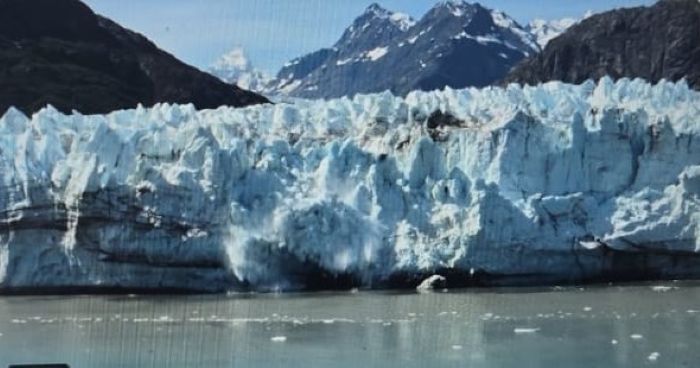
When a warming mountain range meets an accelerating development machine
“Nature never deceives us; it is always we who deceive ourselves.” — Jean-Jacques Rousseau
On the morning of 26 August 2026, the Himalayas delivered another warning.
An enormous mass of ice and rock collapsed in the Langtang region along the Nepal-Tibet frontier, triggering a cascading disaster of debris, river blockage and sudden flooding. Roads, bridges, settlements, hydropower infrastructure and a vital cross-border trade route were swept away. Rescue operations were still struggling to reach some of the worst-affected areas as the scale of the tragedy continued to unfold.
What made the disaster particularly unsettling was the seismic signal it generated.
Initial reports suggested an earthquake, with the seismic event subsequently measured at around magnitude 5.2. Further analysis indicated that the signal was generated by the enormous collapse of ice and rock rather than by a conventional tectonic earthquake. A mountain had moved with enough force to register on seismic instruments like an earthquake.
That distinction matters.
Because the real story is not simply what happened in Nepal on one terrible morning. It is what the event tells us about a Himalayan system under increasing stress.
The mountains are warming. Glaciers are retreating. Permafrost is degrading. Glacial lakes are expanding. Slopes are becoming increasingly susceptible to instability. At the same time, roads, tunnels, hydropower projects, tourism infrastructure and settlements are pushing deeper into terrain where the margin for error is exceptionally small.
The danger, therefore, is no longer a single hazard.
It is the cascade.
The Anatomy of a Mountain Disaster
A glacial lake can look deceptively peaceful from a satellite image or from a valley below.
Its water, however, may be held behind a moraine — an accumulation of loose rock, sediment and ice left behind by a retreating glacier. Such natural dams can be inherently unstable. An avalanche, landslide, intense rainfall event, rapid ice melt or another disturbance can initiate a chain reaction.
A lake may overtop or breach. A landslide may enter the water and generate a surge. A temporary blockage may form downstream and then collapse.
The resulting flood is not an ordinary river flood.
It can carry boulders, trees, sediment and enormous quantities of debris, transforming water into a fast-moving geological battering ram. This is what makes a Glacial Lake Outburst Flood, or GLOF, so dangerous. The hazard is not confined to the lake itself; it can travel far downstream through valleys where people, roads, bridges, power projects and entire settlements have been built.
The mountain hazard becomes a human hazard.
And the human footprint can determine how catastrophic the final outcome becomes.
The Numbers Are Already Speaking
The evidence is no longer anecdotal.
A major global assessment using three decades of satellite observations found that the volume of glacial lakes worldwide increased by about 50 per cent between 1990 and 2020. The growth reflects the changing conditions of a warming cryosphere and the increasing formation and expansion of glacial lakes.
The Indian Himalayas tell a similar story.
ISRO's analysis of satellite imagery from 1984 to 2023 identified 2,431 glacial lakes larger than 10 hectares in the Indian Himalayan river basins. Of these, 676 had expanded significantly since 1984. Most strikingly, 601 of those expanding lakes had more than doubled in size.
This does not mean that every expanding lake is about to burst.
It means something more important: the physical system on which downstream risk calculations depend is changing.
India has consequently strengthened the monitoring of potentially dangerous glacial lakes and related high-altitude water bodies. The challenge is not merely identifying which lakes are growing, but understanding which combinations of lake geometry, moraine stability, surrounding slopes and downstream exposure could produce catastrophic consequences.
And the human exposure is enormous.
A peer-reviewed study in Nature Communications estimated that around 15 million people globally are exposed to the impacts of potential GLOFs, with approximately 9.3 million in High Mountain Asia.
These are not merely numbers in a research paper.
They are people living downstream of mountains that are changing faster than much of the infrastructure around them.
The Transboundary Blind Spot
The Himalayas do not recognise political boundaries.
A lake can form in one country, a river can cross into another, and the consequences can eventually reach a village hundreds of kilometres away.
That creates an uncomfortable policy problem.
A downstream country may monitor its own rivers meticulously and still have limited control over a hazard developing upstream.
Satellite imagery can provide invaluable information, but it cannot substitute for real-time local observation, communication and cooperation.
And that makes transboundary data-sharing more than a diplomatic courtesy.
It can be a life-saving instrument.
The Himalayan crisis therefore demands something larger than national disaster management. It requires regional mechanisms through which information about dangerous changes in glaciers, lakes, rivers and slopes can move as quickly as the hazards themselves.
A satellite can see a lake.
It cannot negotiate an emergency protocol.
When Development Becomes a Force Multiplier
Climate change does not explain every Himalayan disaster.
The mountains have always been geologically restless. Earthquakes, landslides, avalanches, cloudbursts and floods are part of their natural history.
But climate change is altering the background conditions.
Recent research increasingly points to interactions among glacier retreat, permafrost degradation, changing precipitation and slope instability across the high Himalayas. The significance is not that warming automatically causes every landslide or flood. It is that warming can alter the conditions in which several hazards interact.
That should force a rethink of how development is planned.
The question is not whether roads, tunnels, bridges and hydropower are needed.
They are.
The question is whether infrastructure designed for yesterday's Himalayas is adequate for tomorrow's.
Black carbon and other pollutants can darken snow and ice, reducing reflectivity and increasing the absorption of solar radiation. Research in Himalayan glacier environments has demonstrated significant radiative effects from black carbon. But the effect varies with altitude, season, snow conditions and location. It would therefore be misleading to reduce a complex regional process to one dramatic temperature figure.
The same caution is necessary with construction.
Excavation, road cutting, tunnelling, blasting and disposal of construction material can disturb slopes and alter drainage. In an already fragile landscape, those interventions deserve rigorous, site-specific assessment.
But it would be scientifically lazy to claim that every blast causes a glacier collapse, or that every hydropower project creates a GLOF.
The stronger argument is simpler:
Do not add avoidable instability to a naturally unstable landscape.
The Warnings We Have Already Received
The Himalayas have not been short of warnings.
On 7 February 2021, a massive rock-and-ice avalanche detached from Ronti Peak in Chamoli, Uttarakhand. An estimated 27 million cubic metres of rock and glacier ice collapsed, producing a highly mobile mass flow that devastated the valleys below, severely damaged two hydropower projects and left more than 200 people dead or missing.
The significance of Chamoli was not simply the size of the avalanche.
It was the hazard cascade — rock and ice becoming debris, debris interacting with water, and the resulting force meeting infrastructure in its path.
In October 2023, the South Lhonak glacial lake outburst in Sikkim destroyed the 1,200-MW Teesta III dam and caused widespread downstream destruction. It demonstrated how quickly a high-altitude event can become an infrastructure catastrophe far downstream.
And now comes Nepal.
The details of the latest event will continue to be studied. Scientists will examine the roles of temperature, snow and ice conditions, slope instability, geology and any human interventions in the surrounding landscape. Experts have already suggested that unusually rapid melting may have contributed to the glacier's instability, but the precise chain of causation remains under investigation.
But one fact is already difficult to escape.
The Himalayan hazard is becoming increasingly compound.
Ice interacts with rock.
Rock interacts with water.
Water interacts with infrastructure.
And infrastructure interacts with human lives.
Rethinking What We Call Development
The answer is not to stop development in the Himalayas.
Nor is it to romanticise an untouched mountain landscape while ignoring the legitimate needs of people who live there.
The answer is to change the definition of development.
Environmental impact assessments must become more than paperwork preceding construction. They should incorporate cumulative basin-level risk, changing glacier and permafrost conditions, downstream exposure and the possibility of cascading failures.
Projects should be assessed not merely for whether they can be built, but for whether they can remain safe as the climate changes.
Early-warning systems need to move from pilot projects to permanent infrastructure. High-risk lakes require continuous or near-real-time monitoring where technically feasible, combined with downstream sirens, mobile alerts, clearly marked evacuation routes and communities trained to respond before official instructions arrive.
And transboundary data-sharing cannot remain an occasional diplomatic courtesy.
If a dangerous lake sits upstream of another country's population, information about its changing condition is not merely scientific information.
It is life-saving information.
Land-use planning needs greater discipline too. River corridors, floodplains and known hazard zones cannot continue to be treated as convenient real estate simply because the valley floor is narrow.
Tourism, too, must confront carrying capacity.
A mountain road that looks profitable on a feasibility spreadsheet can become an extraordinary liability when a slope fails, a bridge disappears or an entire valley is cut off.
The Myth of the Harmless Hydropower Project
Hydropower is an important part of India's clean-energy transition. That argument should not be dismissed.
But "renewable" does not automatically mean "risk-free".
Run-of-the-river projects may reduce some impacts associated with large reservoirs, but they can still involve tunnels, roads, diversion structures, excavation and extensive alteration of mountain terrain.
So the question is not simply:
Dam or no dam?
It is:
What kind of infrastructure can coexist with a mountain whose physical behaviour is changing?
That is a harder question.
It is also the one we need to ask.
The Economics of Pretending Not to Know
There is another language that governments, investors and corporations understand particularly well: risk.
A project may survive an environmental objection. It may survive a protest. It may even survive a warning from a scientist. It becomes considerably harder to ignore when insurers refuse to cover it, lenders price geological and climate risk into financing, investors demand disclosure and courts begin asking whether foreseeable hazards were adequately assessed.
That is where environmental responsibility becomes economic responsibility.
The destruction of infrastructure by a GLOF is not merely an ecological tragedy. It is also the destruction of capital, livelihoods and public money. What appears inexpensive at the construction stage can become ruinously expensive when a mountain, a river or a glacier suddenly exposes the assumptions on which the calculation was based.
Perhaps, then, the most persuasive environmental argument is not always a moral one.
Sometimes it is simply this:
What looks cheap at the construction stage can become ruinously expensive when the mountain sends the invoice.
Author's Note
Perhaps the most unsettling thing about writing about the Himalayas is that the mountains do not need to be dramatic to make their point. They can remain silent for years, even decades, while roads climb higher, tunnels go deeper, dams rise in narrow valleys and settlements spread along rivers. Then, without warning, the landscape reminds us that it was never quite as still as we imagined.
The events of 26 August have made that reminder painfully immediate. Scientists will continue to examine the precise sequence that turned a glacier collapse into an avalanche, a temporary blockage and a devastating flood. They will also continue to examine how much warming, snowmelt, changing mountain conditions and human intervention contributed to the collapse. It would be premature to claim more certainty than the evidence allows.
But uncertainty about the precise trigger should not become an excuse for uncertainty about the risk.
That, perhaps, is where the larger lesson lies. We do not need to predict every Himalayan disaster. We need to recognise that the conditions under which people build, travel and live in the mountains are changing — and that infrastructure, policy and imagination have to change with them.
The Himalayas are not the enemy. Neither are development, hydropower, roads or tourism. The problem begins when development forgets that the landscape has limits, and when economic calculations treat those limits as someone else's problem.
There is something humbling about a mountain reminding us of this.
We measure its rivers, map its glaciers, drill its rocks, tunnel through its slopes and calculate the megawatts they might produce. Yet the mountain remains indifferent to our spreadsheets. It keeps its own time.
Perhaps that is why Rousseau's old observation still feels strangely appropriate: “Nature never deceives us; it is we who deceive ourselves.”
The Himalayas may be giving us a similar lesson.
The warning is already there.
The question is whether we will recognise it before we have to count the cost again.
The mountains are speaking. We should listen before the next warning becomes a funeral procession.
<><><>
(Author: kgsharma1@gmail.com; The writer is a retired officer of the Indian Information Service and a freelance writer. Also worked as an international media consultant with UNICEF Nigeria and contributes regularly to various publications.)



Related Posts
Cyclone alert: Bay of Bengal storm likely to bring heavy rain to WB
MP: IMD issues thunderstorm, rain alert for several districts
Nepal flash floods sweep away houses, 82 people rescued, 5 missing