 Krishan Gopal Sharma
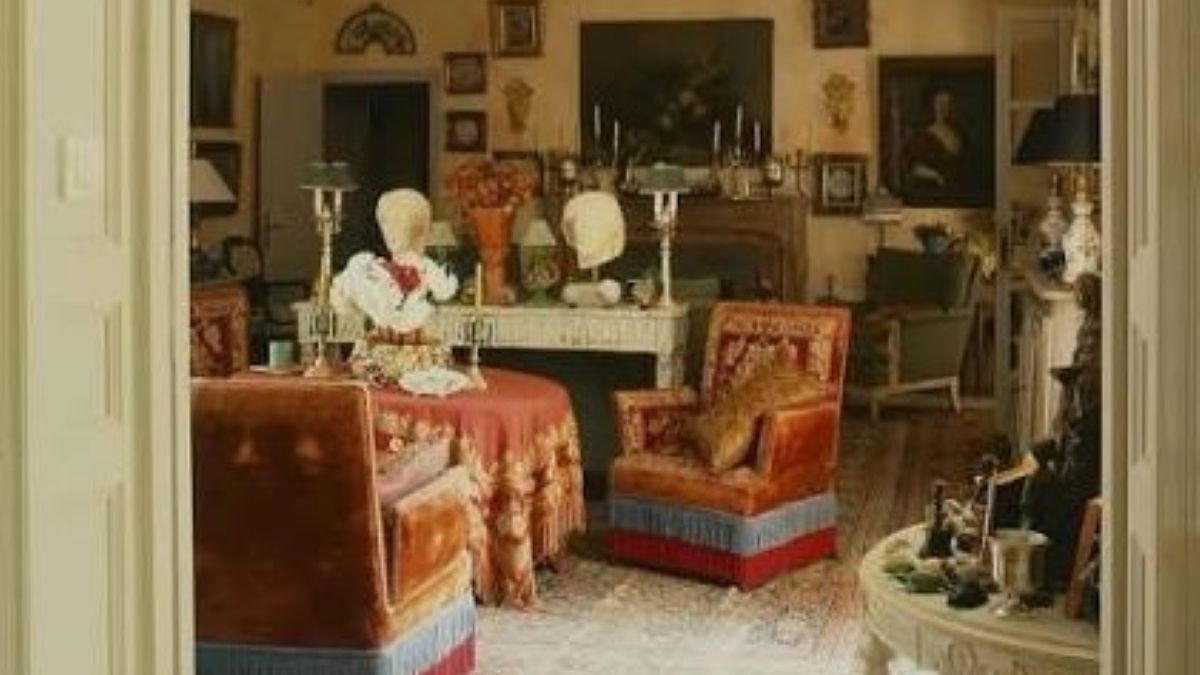
A family memoir of Maa, Papa and the memories that time could not take away. Some memories stay with us not because life was easy, but because the people with whom we shared it made even its difficulties worth remembering.
A Note to My Family
Dearest Maa, brothers and sisters,
The other day, I found myself looking back at our childhood: the life we shared, the values Maa and Papa instilled in us, and the simple pleasures that made those years so memorable. One memory led to another, until I felt an urge to put them into words, lest the passing years blur their edges.
This is not my story alone. It belongs to all of us—to the sun-baked fields of Rajasthan, our five o'clock morning feasts, the midnight tea parties beneath a leaking roof, the Bareilly manja, and the magic of making brass and copper utensils shine with coal ash. Above all, it belongs to Maa, whose quiet smile and extraordinary strength have remained a source of comfort to every one of us.
I offer these recollections as a keepsake for our family. They are not an attempt to make the past look better than it was, but a way of returning, for a little while, to the world that shaped us—and to the people who made it home.
Part I: The Gathering and the Soil
The monsoon air on a late September evening brought a welcome breeze into the living room, stirring the curtains beside the large windows. Inside, the room was alive with familiar voices. The seven siblings, our spouses, children who had grown into adults, and grandchildren of different ages had gathered under one roof. Three generations, each with its own concerns and preoccupations, had come together around the person who connected them all.
An old playlist played softly in the background. Karen Carpenter's familiar voice drifted through the conversation, bringing with it the peculiar ache of songs associated with another time. Nobody had planned an evening of reminiscence, yet the past seemed to have found its way into the room.
At the centre sat Maa. At ninety-two, with a pacemaker keeping her heart in rhythm and knees that bore the weight of a long life, she watched us with her familiar, gentle smile. She did not need to command attention. Somehow, the conversation kept returning to her.
"Maa," one of my younger sisters said, handing her a small steel glass of hot cardamom tea, "the children want to know what you ate during those Rajasthan summers, when the temperature reached forty-five degrees and you were working in the fields."
The conversation quietened. The teenagers looked up from their phones, while the younger children paused their game of Monopoly. Maa took a sip of tea and began, slowly, as though opening a door to a house none of us had visited for years.
"We had no refrigerators or coolers. There was the heat, the long walk to fetch water, and the goats to look after. We ate thick rotis made from hand-ground bajra and jau. And when we wanted an onion, we did not always reach for a knife. We broke it open with the fist."
She demonstrated the movement with a gentle press of her hand against the armrest.
"I still do that!" I exclaimed from the edge of the sofa, making my wife laugh. "I wait until the children leave the kitchen, then crack an onion with my mutthi. It has become a habit."
My young nephews stared at me as though I had revealed an unusual survival skill. "Uncle, you actually smash onions with your bare hands?"
"Of course," I replied. "And now the same millets are sold in fancy packets, accompanied by descriptions of their nutritional benefits. What we ate as ordinary food has become a fashionable health product. We never called it a superfood. It was simply lunch."
The laughter spread around the room. My elder sisters recalled our childhood breakfasts, when we ate without counting the parathas at five in the morning, only to gather around Papa's plate at eight and steal a mouthful before he left for the office. There was never a shortage of appetite, or of hands reaching towards somebody else's food.
As coffee, ice cream and hot snacks made their rounds, our conversation moved to the courtyard of the old house. Mountains of brass and copper utensils would accumulate after meals, their surfaces blackened by soot from the angithi. We siblings would compete to clean them, rubbing grey coal ash over the blackened metal until its shine returned.
"But didn't your hands get dirty?" a little niece asked, looking at her neatly manicured fingers.
"Of course they did," I said. "But there was something satisfying about watching a dull utensil emerge bright and clean. Maa never had to order us to help. We wanted to make her work easier, and we enjoyed doing it together."
Perhaps we understood little about the value of labour then. We only knew that the work had to be done, that it could become a game, and that an ordinary afternoon could be made enjoyable by having one another around.
The children listened to our accounts of midnight tea beneath a leaking roof, books protected by sheets of plastic, and the resourcefulness that everyday life demanded. They were trying to imagine a world without the conveniences they had always known. Yet scattered across the floor were a cricket bat, a football and a board game. The equipment was more expensive and the packaging more attractive, but the pleasures they offered were familiar. We, too, had played, competed, quarrelled over rules and invented ways to prolong a game.
Some things had changed beyond recognition. Others had scarcely changed at all.
Part II: The Wild Aravallis and the Engineer's Verandah
As the evening deepened, the music changed. A Cliff Richard song brought another wave of recognition, and the children drew closer to Maa, eager for the next instalment of a world they had never seen.
"Your Nanni was not easily frightened," Maa began, her eyes taking on a distant, almost defiant brightness. "In those days, the foothills of the Aravallis were covered with thick vegetation. There were massive rocks, scrub and trees, and wild animals moved through the hills. Tigers, leopards and hyenas were part of the landscape."
"Hyenas?" one of my nephews asked.
"We called them jarakh," Maa replied. "People feared them, partly because of the stories and superstitions surrounding them. But your Nanni would not stand watching if a leopard came near her goats. She would pick up a short wooden stick and chase it away, shouting until it retreated among the rocks."
Maa did not describe her mother's courage as something extraordinary. To her, it was simply what a woman responsible for her family and livelihood had to do. Yet the image stayed with us: a woman facing a predator with little more than a stick, unwilling to surrender what she depended upon.
She also remembered the days when royal hunting parties returned from the forests with tigers displayed as trophies. The animals that had once inspired fear were turned into spectacles of human triumph. To the children listening, the story belonged to a remote age. To us, it was a reminder of how much the landscape and our relationship with it had changed.
Our father's world, by contrast, was one of invention. When we moved to the city, the wilderness of the foothills gave way to the verandah, which Papa transformed into a workshop, a playground and, in its own way, a school.
He was an engineer by profession, but to us he was the man who could make almost anything work. In an age before electronic toys and digital entertainment, he fashioned playthings from pieces of locally available wood. I still remember him joining a length of copper wire, an iron nail and a small battery cell to make a working electrical buzzer. We watched in fascination as an arrangement of ordinary objects came alive. Without calling it a lesson, Papa had introduced us to the possibilities of electricity.
During the Delhi summers, he would suspend a sturdy rope swing in the verandah, giving us a place to play when the heat outside became oppressive. He taught us chess, too, a game that demanded patience and foresight, qualities we did not always display in our other pursuits.
Papa liked his tea strong and piping hot. If one of us prepared a cup to his satisfaction and served it in a heavy steel glass, he would reward the effort with a shiny twenty-five-paise coin—a chavanni. The coin was small, but in our eyes it was a fortune. We were pleased to have pleased him, and the reward made the achievement official.
The kitchen, meanwhile, was an orderly collection of durable metals: copper (tamba), brass (peetal), bronze (kaansa), cast iron and stainless steel, each used for particular purposes. The utensils were heavy, built to last, and often outlived the immediate needs for which they had been bought. They were not displayed as antiques. They were simply part of the household.
Books occupied an equally important place in our lives. All seven of us visited the local libraries and returned carrying stacks of books. The borrowing period was fourteen days, but in our house of nine, the competition was to finish them in ten. There was always another book waiting, and usually somebody eager to discuss what they had read.
Papa was our guide through this world. He patiently helped us with English, mathematics, science and drawing. He was fluent in English, Urdu, Persian and Pashto, and his command of languages seemed limitless to us.
But he had one gap in his otherwise formidable repertoire: Sanskrit.
I remember the quiet satisfaction of sitting across from my father and teaching him Sanskrit verses. The student had become the teacher, if only for a while. I suspect Papa enjoyed the reversal as much as I did. It was one of the small privileges of childhood: discovering that even the person you admired most could learn something from you.
Part III: Kites, Scraped Knees and Shared Magic
A familiar sound or smell can return us to childhood more quickly than a photograph. For me, it is often the memory of a kite string stretched against a summer sky, its tension running through my fingers as the wind lifted the paper above the rooftops.
"We did not always buy our storybooks with money," I told the grandchildren. "Sometimes we traded for them. We would sneak into the kitchen, take a cup of raw atta from Maa's container and run to a street vendor selling little paperbacks. A cup of flour could buy us a book of folk tales."
The children were amused by the transaction. To them, books arrived through shops, libraries or screens; flour was something that came in a packet. They found it difficult to imagine one being exchanged for the other. Yet, to us, the bargain made perfect sense. The flour could feed us, but the book could transport us elsewhere.
My younger brothers had a gift for making things. They could turn scraps of material into mechanical toys, draw, paint and devise little experiments. My interests lay elsewhere. I preferred the open sky and the long hours spent flying kites from the terrace. Even when the Delhi sun drove the temperature towards forty-five degrees, I could remain outside until my face was red and burning.
Papa knew how much kite-flying meant to me. His office work sometimes took him away on long tours, but whenever he returned, he remembered to bring me a prized possession: a spindle of manja from Bareilly. The glass-coated string was sharp, and its reputation travelled ahead of it. Holding it in my hands made me feel that I had everything a boy could want.
Looking back, I recognise that these small gifts carried a meaning beyond their price. Papa had been away, but he had thought of me. That was the part I understood, even if I could not have expressed it then.
Learning to ride a bicycle was another adventure. We pooled our coins, hired cycles from the local rental shop and took turns pushing one another along the gravel lanes. We fell often, scraping our knees and shins. There were no helmets or elbow pads, and we learnt to balance partly through persistence and partly through the consequences of losing it.
"Didn't you cry?" a niece asked. "Didn't Dadi get angry?"
"We tried not to complain," I replied. "And we certainly did not rush to show our parents every wound. We had our own remedies, not all of them wise. I remember reaching for the coal ash in the courtyard and applying it to a bleeding scrape. It stung, but we believed we were taking care of ourselves, and then we went back to playing."
The memory made us laugh, though we knew better now than to mistake every childhood remedy for good medicine. What I remember most is not the ash but the urgency to return to the game. A scraped knee could wait; the other boys were already riding away.
Our neighbourhood was full of such small adventures. Stray cats and dogs occupied the verandah wall as if it belonged to them. We slipped into the nearby temple compound, climbed low branches and helped ourselves to raw, sour guavas and pink pomegranates, eating them with a pinch of salt before the priest caught us. We were not particularly accomplished thieves. We were simply children who found the world inviting and the forbidden fruit irresistible.
Then there were the trips to the cinema or the circus. These were not casual outings but major family occasions. Preparations began well in advance. Clothes were put aside, snacks arranged, and the children made ready for a journey that might have been short in distance but seemed enormous in anticipation. We would set out together, a small procession of siblings and parents, carrying the excitement of the day with us.
The pleasure lay as much in the preparations as in the event itself. We remember the films and performances, but we also remember the collective excitement, the conversations on the way and the sense that something special was happening because we were all there.
Perhaps that is one of the things childhood gave us without our knowing it: the ability to make an occasion out of very little. A rented bicycle, a paper kite, a book acquired with flour or a family outing could occupy the mind for days. We did not need every pleasure to be new. We needed it to be shared.
Part IV: Yesterday Once More
The evening had moved into its quieter hours when my sister went to the music system and selected an old Hindi song. The familiar strains of ‘Koi Lauta De Mere Beete Hue Din’ filled the room.
Conversation stopped. The teenagers put their phones aside. My brothers and sisters, who had been laughing over old stories only moments earlier, grew quiet. The younger children sensed that the song had changed something in the room, even if they could not fully understand what.
Each of us seemed to be returning to a different corner of the past: the Rajasthan fields, the courtyard blackened by the angithi, the taste of a freshly broken onion, the sting of a scraped knee, the excitement of a kite rising into the sky. I remembered the blue plastic sheets spread to protect our books when rain found its way through the roof.
Maa closed her eyes. Her lips moved faintly with the melody. I wondered what she was seeing: her own childhood, the people who had shaped her, the children she had raised, or simply a succession of moments that no longer needed words.
As one song gave way to another, the strains of ‘Woh Shaam Kuchh Ajeeb Thi..’ seemed to belong to the gathering itself. We were older now, with homes, families and responsibilities of our own. Time had taken us in different directions, but for this one evening it had brought us back together.
I looked around the room. The walls were sound, the clothes dry, the toys better made and the conveniences of life beyond anything we had known as children. Yet, beneath these changes, something recognisable remained. We were still the siblings who had fought over food, competed over books, chased kites and found reasons to laugh in the middle of ordinary work.
We had not been untouched by time. We had lost people, acquired responsibilities and learnt things that childhood could not teach us. Nor had the past been free of hardship. But the memories that had survived were not simply records of what we lacked. They were records of what we made possible with what we had: companionship, ingenuity, shared labour and the assurance that someone would be there when we needed them.
Maa opened her eyes and looked around at her children, grandchildren and great-grandchildren. That familiar smile returned, gentle and a little tired. I wondered whether she could see, in the faces before her, the continuation of the life she and Papa had built. None of us could return her years to her, but we could sit beside her, listen, remember and pass those memories on.
The music continued softly. Nobody seemed eager to break the spell.
I had begun the evening thinking about childhood, about a world that had disappeared beneath the pace of modern life. But as I looked around, I realised that the past had not entirely gone anywhere. It was present in the way my sisters remembered, in the jokes my brothers still understood without explanation, in the questions the children were asking, and in the woman whose quiet strength had held so much of our history together.
Outside, the night went on as nights do. Inside, for a little longer, we remained together in the company of our memories.
And Maa was still there, smiling.
<><><>
(Author: kgsharma1@gmail.com; The writer is a retired officer of the Indian Information Service and a freelance writer. Also worked as an international media consultant with UNICEF Nigeria and contributes regularly to various publications.)