 Nisha Singh
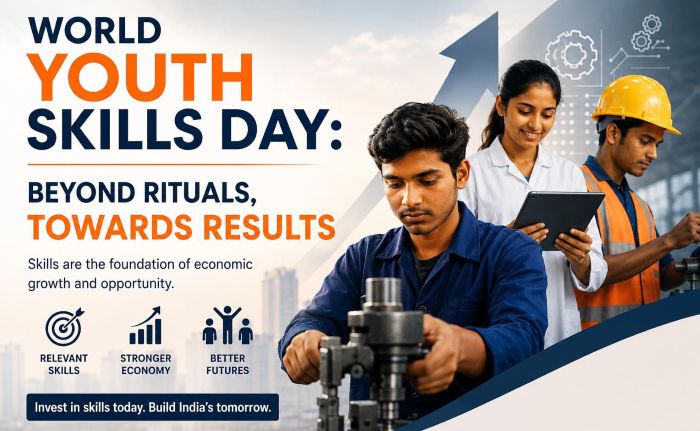
Every year on July 15, World Youth Skills Day reminds us that skills are the foundation of economic growth and opportunity. For India, however, the real question is whether we are using this occasion to drive meaningful change or simply marking another date on the calendar.
Over the past two decades, I have witnessed encouraging progress in India's skilling ecosystem. Millions of young people have benefited from the Skill India Mission.
Competitions such as IndiaSkills and WorldSkills have raised the profile of vocational education and demonstrated what Indian youth can achieve when given the right opportunities.
Yet one challenge persists. Employers continue to struggle to find people with the skills they need, particularly in areas such as artificial intelligence, digital technologies and advanced manufacturing. India's skilling challenge is no longer about expanding access. It is about ensuring that training leads to employability, productivity and sustainable careers. The QS Future Skills Index also highlights the need for stronger alignment between education, skilling and industry.
With nearly 65% of India's population below the age of 35, our demographic advantage will translate into economic strength only if young people continue to learn and adapt throughout their careers. Technology is reshaping the workplace at an unprecedented pace, while the gig economy is making lifelong learning a necessity rather than an option. A qualification earned at the start of a career cannot remain sufficient for decades.
Equally important is changing how we view vocational education. Skilled trades and technical careers are essential to a modern economy, yet they are often seen as second choices. Countries that have built strong manufacturing and innovation ecosystems have done so by investing in skilled technicians, trainers and industry-ready talent.
World Youth Skills Day should therefore serve as an annual checkpoint.
-Are curricula keeping pace with industry?
-Are trainers equipped to teach emerging technologies?
-Are employers actively shaping training programmes?
-Most importantly, are young people leaving with skills that genuinely improve their careers and livelihoods?
These questions matter far more than the number of events organised or certificates distributed.
The way forward requires a shared commitment from government, industry and training institutions. Curricula must evolve continuously, trainers need regular exposure to emerging technologies, and greater investment is required in AI, green skills and lifelong learning. Success should be measured not only by enrolment but by employability, productivity and entrepreneurship.
India's young people are ambitious, adaptable and eager to learn. Skill development cannot remain an annual conversation. It is a long-term national investment that will determine whether India's demographic dividend becomes its greatest competitive advantage.
(Nisha Singh is a policy analyst under MSDE, working at the intersection of skilling, employability and workforce development. Views expressed are her own.)



Related Posts
France to preserve India’s manuscript heritage
India must lead in creating future technologies, says PM Modi
India pushes for BIOFIN, tech transfer & global cooperation