 Ira Singh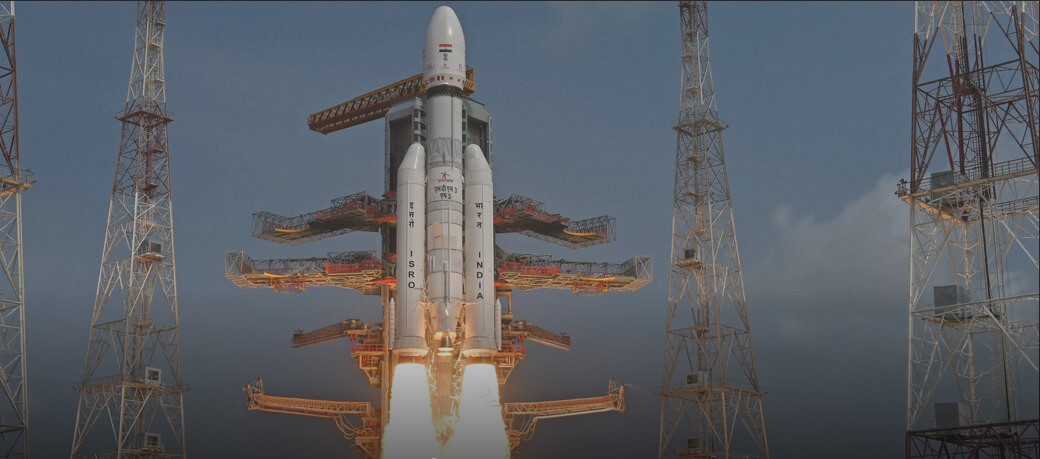
India's ambitious space programme is confronting an unexpected challenge, not from rocket failures or technological hurdles, but from a steady outflow of experienced scientists from the Indian Space Research Organisation (ISRO). As the country prepares for landmark missions such as Gaganyaan, Chandrayaan-4 and the Bharatiya Antariksh Station, the agency is struggling to retain the very talent that helped build its global reputation.
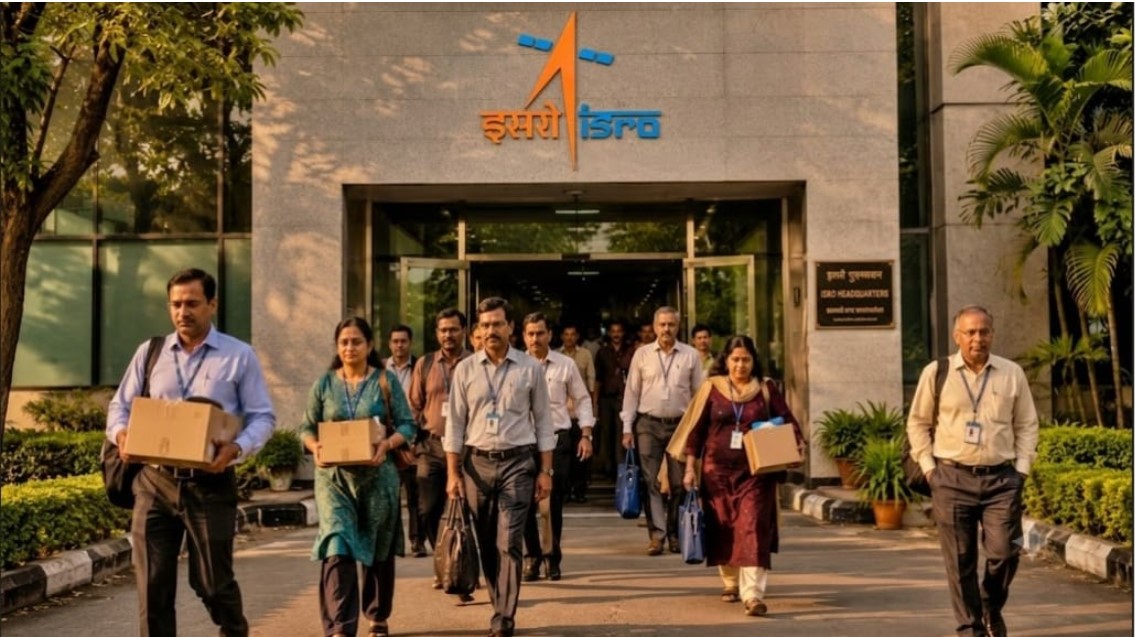
More than 100 scientists have either resigned or opted for voluntary retirement in recent months, prompting the Department of Space (DoS) to tighten rules governing exits from the country's premier space agency. The move underscores growing concerns within the government that the loss of experienced personnel could affect projects of national importance.
According to agency reports,in a memorandum issued on July 14, the Department of Space directed major ISRO centres not to routinely approve resignation or voluntary retirement requests from Group 'A' scientific and technical personnel associated with Gaganyaan and other key missions. Instead, all such requests must now be forwarded to the Department with recommendations from the respective centre directors for a final decision.The directive effectively reverses a 2020 administrative reform that had delegated approval powers for resignations and voluntary retirements to heads of ISRO centres for scientists up to the Scientist/Engineer-SG level.
The new policy applies to leading ISRO establishments, including the UR Rao Satellite Centre (URSC), Vikram Sarabhai Space Centre (VSSC), Satish Dhawan Space Centre (SDSC), Liquid Propulsion Systems Centre (LPSC), Space Applications Centre (SAC), National Remote Sensing Centre (NRSC), ISRO Telemetry, Tracking and Command Network (ISTRAC), and the Master Control Facility (MCF).The government acknowledged that the recent wave of resignations has affected scientists working on flagship programmes, making talent retention a strategic priority.
Private Space Sector Emerges as a Powerful Magnet
Industry experts attribute the growing departures primarily to the rapid expansion of India's private space ecosystem.Since the space sector was opened to private participation in 2020 and the Indian Space Policy was introduced in 2023, hundreds of startups have emerged, offering aerospace professionals opportunities that were previously unavailable.
Unlike traditional government organisations, private companies provide significantly higher salaries, stock ownership, faster promotions, flexible work cultures and the chance to lead cutting-edge projects early in one's career. Engineers also enjoy shorter development cycles, allowing them to see ideas evolve from design to launch far more quickly than in conventional public-sector environments.Several former ISRO veterans have also established or mentor private aerospace firms, creating an ecosystem where experienced scientists can continue working on advanced technologies while enjoying greater professional autonomy.
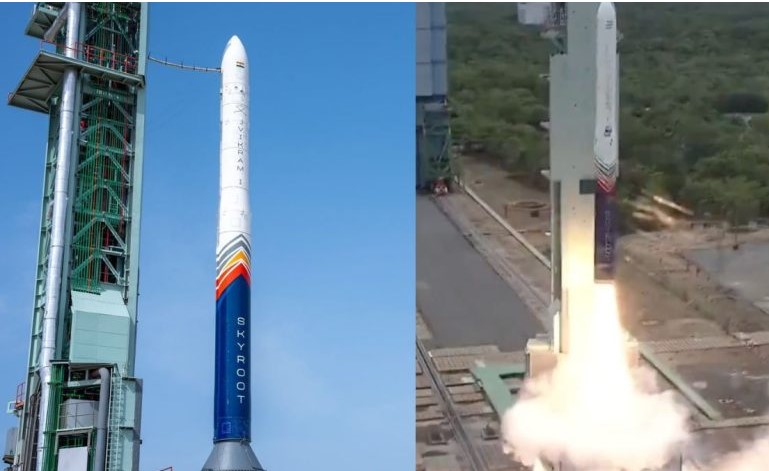
India now has more than 400 registered space startups, which have attracted nearly $500 million in investments, including around $150 million in 2025 alone. Companies such as Pixxel, Dhruva Space, Skyroot Aerospace, Agnikul Cosmos and Bellatrix Aerospace have become major employers for aerospace talent.
Delayed Missions Add to Growing Frustration
While better compensation is a major attraction, insiders say it is only part of the story.ISRO has experienced an unusual slowdown in mission execution over the past year, with several key launches slipping beyond their announced timelines. Missions including the Gaganyaan G1 test flight, SSLV-L1, GSLV-F17 and the industry-built PSLV-N1 have all faced delays.The agency has also encountered technical setbacks. Its reliable Polar Satellite Launch Vehicle (PSLV), long regarded as ISRO's workhorse, suffered two consecutive mission failures within a year,according to agency reports.In January, the PSLV-C62 mission carrying the EOS-N1 Earth observation satellite deviated from its planned trajectory after disturbances during the third stage. Earlier, the PSLV-C61 mission carrying the EOS-09 radar satellite failed after a chamber pressure drop affected the third stage, resulting in the loss of the mission.
Current and former officials also point to increasing centralisation of decision-making within the organisation. According to several senior personnel speaking on condition of anonymity, important technical and administrative approvals have become increasingly concentrated at the Chairman's Office, slowing decision-making and reducing operational flexibility across project teams.
Experts Call for Modern Employment Model
Many senior officials believe ISRO's employment structure also requires reform.Space policy experts argue that the agency could adopt a hybrid workforce model similar to NASA and the European Space Agency, where permanent employees work alongside project-based specialists and contractors.Such a system would enable ISRO to retain critical institutional expertise while allowing greater flexibility in hiring specialised talent for specific missions.With the private sector increasingly taking responsibility for commercial launches and satellite manufacturing, experts believe ISRO can focus more on strategic areas such as human spaceflight, deep-space exploration, reusable launch vehicles, nuclear propulsion and advanced research.
Expertise Cannot Be Replaced Overnight
Although the scientists leaving represent only a small percentage of ISRO's workforce of more than 14,600 employees, officials believe the impact is far greater than the numbers suggest.Many of those exiting have spent years developing specialised expertise through landmark programmes such as Chandrayaan-3, SpaDeX and Gaganyaan. Replacing such institutional knowledge is not as simple as recruiting fresh graduates.Among the notable departures was senior scientist Victor Joseph T, who headed the LVM3 launch vehicle project that will power India's first human spaceflight mission before leaving the organisation earlier this year.
A New Era for India's Space Industry
The talent migration reflects a broader transformation in India's space ecosystem.For decades, ISRO was virtually the only destination for ambitious aerospace engineers. Today, it has become the anchor of a much larger industry where startups and private companies offer attractive alternatives with competitive compensation, faster career progression and greater opportunities for innovation.As India prepares for an ambitious decade of space exploration—including Gaganyaan, Chandrayaan-4, the Bharatiya Antariksh Station and Mangalyaan-2—ISRO's challenge extends beyond developing advanced technology.Its biggest mission may now be retaining the scientists whose expertise has powered India's rise as a global space leader.
(Asstt.Editor)












Related Items
Beyond Diplomacy, India serves BRICS leaders a culinary journey
India passes BRICS Baton to China, PM Modi seeks Declaration action
India, Russia agree to advance bilateral investment treaty talks