 Ira Singh
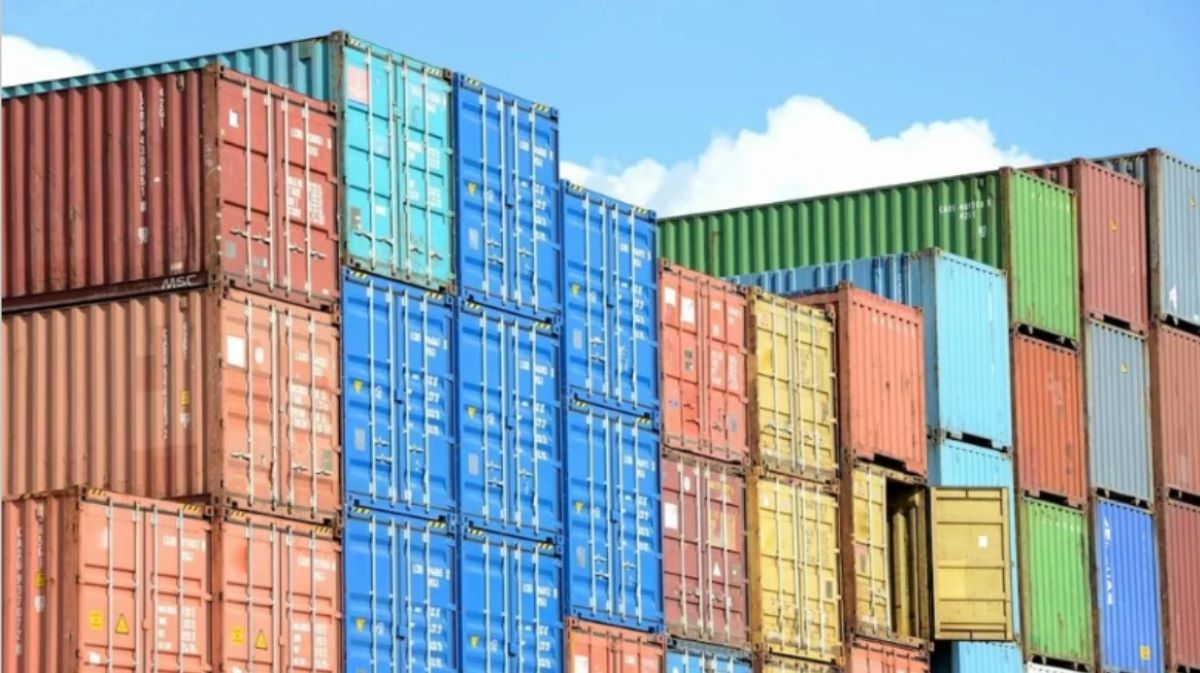
India’s merchandise exports surged to an all-time monthly high of $49.47 billion in October 2026, registering a robust 45.06 per cent year-on-year growth, even as rising crude oil prices and geopolitical disruptions in West Asia pushed up the country’s import bill and kept external trade pressures elevated. The record export performance, however, came alongside a merchandise trade deficit of $39.88 billion, highlighting the growing importance of balancing export competitiveness with energy import costs amid an uncertain global economic environment.
According to data released by Commerce Secretary Rajesh Agrawal on Friday, merchandise exports increased from $34.11 billion in October 2025, marking their fastest growth in five years. Merchandise imports, meanwhile, rose 16.51 per cent to $89.35 billion from $76.69 billion in the corresponding month last year.From an economic perspective, the sharp rise in exports signals improving demand for Indian goods across international markets, supported by stronger shipments in petroleum products, electronics, engineering goods, chemicals and other manufacturing segments. The fact that 43 of India's 50 largest export destinations recorded higher purchases during October also points towards a broad-based expansion rather than growth driven by a handful of markets.Agrawal described October's performance as a significant milestone, stating that merchandise exports recorded their highest-ever monthly value alongside the strongest growth in five years. India's combined exports of goods and services also touched an unprecedented $89.99 billion, registering a 29.91 per cent increase from $69.27 billion in October 2025.
Petroleum, electronics and engineering goods drive export momentum
Petroleum products emerged as the biggest contributor to October's export growth, with shipments jumping 140 per cent year-on-year. Higher international crude oil prices partly contributed to the increase in export value, reflecting the influence of global commodity prices on India's trade figures.Several other sectors also reported substantial gains, indicating strengthening export activity across traditional and emerging industries. Exports of other cereals increased 87 per cent, oil meals rose 85 per cent, electronic goods climbed 62 per cent and handicrafts registered 55 per cent growth. Gems and jewellery exports expanded 40 per cent, while cereal preparations increased 37 per cent. Engineering goods and organic and inorganic chemicals both recorded growth of 36 per cent.The strong performance of electronics and engineering exports is particularly significant from a structural economic standpoint, as these sectors are important to India's efforts to diversify its manufacturing base, strengthen domestic production capabilities and increase its integration into global supply chains.
The geographical spread of export growth further reinforced the positive trend. Shipments to Spain surged 352 per cent during October, while exports to Malaysia, Togo, Singapore, South Africa, Egypt and Hong Kong more than doubled. Exports to Kenya, Ghana, Turkey, Brazil, Oman, Mozambique, the United Kingdom, Mexico, Nepal and Taiwan also registered growth exceeding 50 per cent.Among major trading partners, exports to China increased 48 per cent, followed by Japan at 45 per cent, the United States at 39 per cent, Belgium at 37 per cent and Germany at 33 per cent. Shipments to Australia rose 22 per cent, Bangladesh 21 per cent, while Russia and Italy recorded growth of 20 per cent each.
West Asia tensions and crude oil prices raise import concerns
Despite the record export performance, India's merchandise trade deficit remained a key concern, primarily because of the sharp increase in energy import costs.Petroleum imports, mainly crude oil, rose 54.31 per cent in value terms to $22.82 billion in October. Escalating geopolitical tensions in West Asia, including disruptions to shipping through the strategically important Strait of Hormuz and areas near Bab el-Mandeb, have intensified volatility in international energy markets. The Indian crude oil basket reportedly approached $120 per barrel, adding to the country's import expenditure.With India importing more than 85 per cent of its crude oil requirements, sustained increases in global energy prices can have wider economic implications, extending beyond the trade balance to inflation, transportation costs, industrial production and the country's foreign exchange requirements.
 Higher crude prices also create a complicated trade equation. While they can increase the dollar value of petroleum exports, they simultaneously raise the cost of energy imports, potentially limiting the overall benefits of export growth.However, a sharp decline in precious metal imports provided some relief. Gold imports fell nearly 63 per cent to $5.51 billion in October, compared with $14.72 billion a year earlier, while silver imports declined 28.3 per cent to $1.95 billion from $2.72 billion.Consequently, despite the increase in the overall import bill, the merchandise trade deficit narrowed by approximately 6.3 per cent year-on-year to $39.88 billion, compared with $42.58 billion in October 2025.
Services exports cushion overall trade deficit
India's services sector continued to provide an important cushion against the merchandise trade deficit, strengthening the country's overall external trade position.Services exports for October were estimated at $40.51 billion, while imports stood at $20.72 billion, generating a surplus of $19.79 billion. This represented an increase of approximately 13.5 per cent over the corresponding period last year.Combining merchandise and services trade, India's overall exports reached $89.99 billion, while total imports stood at $110.07 billion, up 16.57 per cent from $94.42 billion a year earlier. The resulting combined trade deficit narrowed to $20.08 billion from $25.15 billion in October 2025, marking a decline of nearly 20 per cent.The services export estimates for October are provisional and based on extrapolations from September data, as the Reserve Bank of India releases official services trade figures with a time lag.The services surplus remains particularly important for India because earnings from information technology, business services and other professional services help offset the merchandise trade deficit and support the country's external account stability.
The October export performance also comes at a time when India is expanding its network of international trade partnerships and seeking greater access to major global markets.Agrawal highlighted the contribution of free trade agreements (FTAs) to India's export growth, pointing to strong performance across several partner economies during the April-September period.Exports to the ASEAN region increased 58 per cent, while shipments to Singapore surged 103 per cent and Malaysia rose 83 per cent. Exports to Sri Lanka grew 73 per cent, Oman 47 per cent, Japan 40 per cent and South Korea 24 per cent. Shipments to the broader South Asian Free Trade Area (SAFTA) region increased 22 per cent.Exports to Mauritius also recorded growth of 49 per cent, while Australia registered an 11 per cent increase, Thailand 7 per cent and European Free Trade Association (EFTA) countries 5 per cent.India's trade agreements with the United Kingdom and New Zealand are entering the implementation phase, while the operationalisation of its agreement with the European Union is expected early next year. Negotiations are also continuing on the first tranche of a proposed trade agreement with the United States, India's largest export market.Economically, these agreements could help Indian businesses diversify export destinations, reduce trade barriers, improve market access and strengthen their competitiveness against international suppliers. However, the long-term benefits will depend on how effectively domestic manufacturers and exporters utilise the opportunities created by these arrangements.During April-October 2026-27, India’s merchandise exports rose 21.97 per cent to $309.06 billion from $253.40 billion a year earlier, while imports increased 16.42 per cent to $527.21 billion. Including services, total exports grew 16.66 per cent to $568.84 billion, while imports climbed 16 per cent to $662.19 billion, widening the combined trade deficit to $93.35 billion from $83.25 billion. The figures highlight the continued strength of India’s export sector, while underscoring the need to boost manufacturing competitiveness, diversify energy sources and manage external risks, particularly volatile crude oil prices and geopolitical disruptions, to ensure sustainable improvement in the country’s trade balance, noted exports.
(Business Correspondent)

Related Posts
India International Trade Fair inaugurated with theme Vikas aur Virasat
New Zealand crush India in fourth ODI
India extends ban on Zakir Naik’s IRF for 5 more years