 Newsinc24 Team
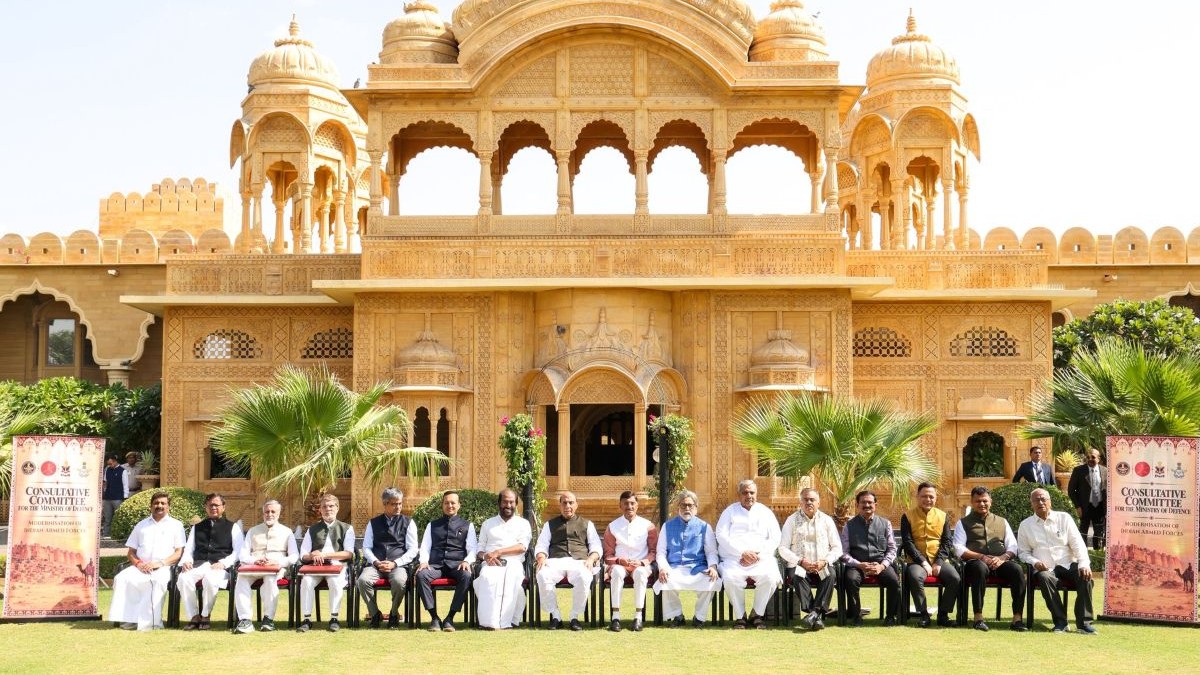
Defence Minister Rajnath Singh on Tuesday said India aims to achieve defence production worth Rs 3 lakh crore and exports of Rs 50,000 crore by 2029, as he chaired a parliamentary consultative committee meeting on modernising the armed forces. Addressing the Consultative Committee of the Ministry of Defence in Jaisalmer, Rajasthan, Singh said the government was committed to building a technologically empowered military capable of meeting present-day and emerging security challenges.
He said defence production had increased from Rs 46,429 crore in 2014–15 to a record Rs 1.78 lakh crore in 2025–26. Defence exports had risen from less than Rs 2,000 crore in 2014 to approximately Rs 40,000 crore. “We aim to achieve defence production worth Rs 3 lakh crore and defence exports worth Rs 50,000 crore by 2029,” he said. Singh highlighted the record defence budget of Rs 7.85 lakh crore for 2026–27, including a capital outlay of Rs 2.19 lakh crore for modernisation and capital procurement. Adequate funding, effective utilisation of resources and prioritisation of the Services’ critical requirements were essential to strengthening military capabilities, he said.
The meeting discussed emerging security challenges, changing warfare practices and the induction of next-generation platforms, weapons and technologies. Strengthening coordination among the three Services, joint operational planning and the use of capabilities across multiple domains were among the key priorities. Participants also examined the role of artificial intelligence, autonomous systems, unmanned platforms, cyber and space capabilities, electronic warfare and advanced communications in preparing the military for future conflicts.
Singh highlighted DRDO’s work on advanced weapons, missiles and systems and said the government was enabling greater private sector participation, from MSMEs to large corporations. He described the effort to strengthen defence capabilities as a “whole-of-the-nation” approach. Underlining the importance of personnel, Singh said military strength depended on the skills and preparedness of its people alongside technology and financial resources.
He referred to the Indian Army’s new formations, including the “Asani”, “Bhairav” and “Shaktiban” platoons, saying they were helping address contemporary operational requirements and adapt to battlefield changes. The minister said modernisation extended beyond acquiring weapons and equipment to improving readiness, adopting technology and developing long-term indigenous capabilities.A strong domestic defence ecosystem would help align technological development with military requirements, expand opportunities for Indian industry and reduce strategic dependence on foreign sources, he said. Strategic autonomy and indigenous technological capabilities were essential to national security, he added.
According to the ministry, the deliberations outlined priorities for critical capabilities, closer coordination among stakeholders, streamlined acquisition and development processes, and periodic assessments against defined objectives.
The meeting stressed a structured, phased approach to building a military capable of responding to conventional, sub-conventional and multi-domain security challenges.



Related Posts
Centre scraps petrol export duty, hikes diesel and ATF levies
Amit Shah sets 2029 target for drug-free India, flags off 'Run for Unity'
Assam targets daily milk production of 10 lakh litres to boost dairy sector