 Newsinc24 Team
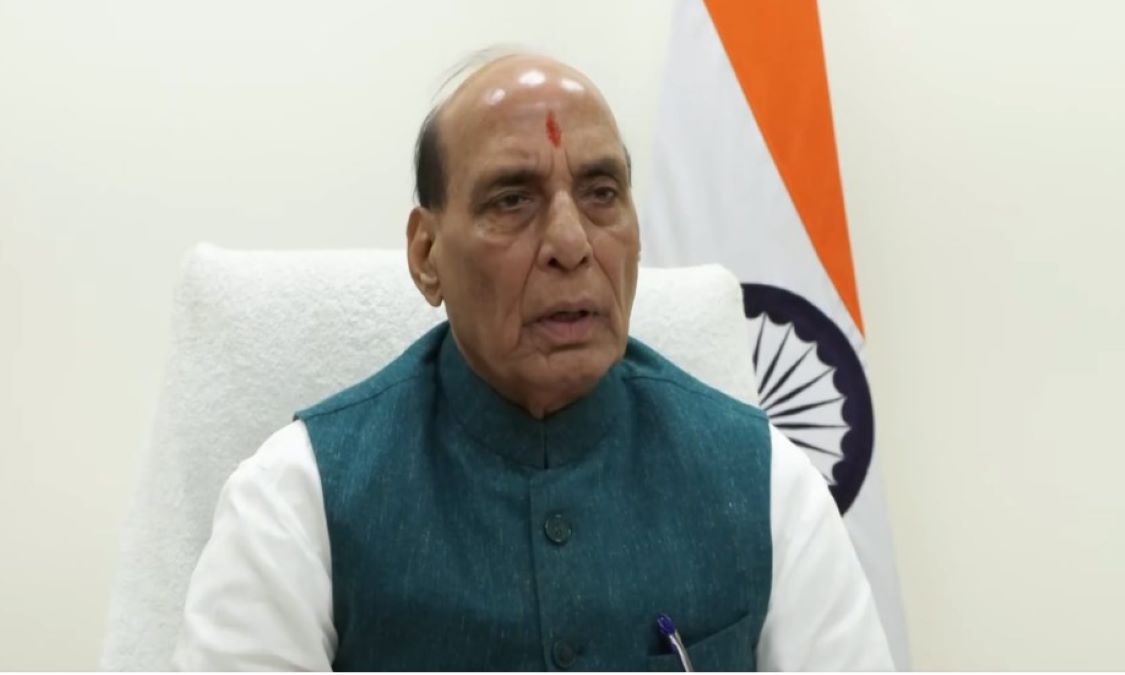
Defence Minister Rajnath Singh on Sunday called for transforming India from a user of advanced technologies into a developer, innovator and global leader, stressing the need to strengthen indigenous Non-Destructive Testing (NDT) capabilities to enhance defence preparedness and strategic self-reliance.
Virtually addressing the 36th Annual Conference on Non-Destructive Evaluation and Enabling Technologies and the 15th International Symposium on Non-Destructive Testing in Aerospace, Singh emphasised the importance of developing domestic capabilities in advanced inspection technologies, specialised sensors, testing equipment and software.He said accurate, reliable and traceable testing results were essential for ensuring quality and strengthening defence capabilities. Undetected defects in critical materials and components could affect equipment performance, increase maintenance requirements and jeopardise mission success. He stressed the need to move beyond identifying defects towards preventing them by ensuring quality at every stage of manufacturing.
#WATCH | At the 36th Annual Conference on Non-Destructive Evaluation and Enabling Technologies and 15th International Symposium on Non-Destructive Testing in Aerospace, Defence Minister Rajnath Singh says, "The theme of this conference ', Innovation for Strategic and Economic Excellence', is particularly relevant in the present times. It reflects our aspiration to build an India that is technologically advanced, industrially strong, strategically secure, and globally competitive. The progress of any nation does not depend merely on the technology it develops. It also depends on the quality, reliability, and the security of the system it builds. This becomes particularly important in strategic sectors, such as defence, where the consequences of any failure can be far-reaching."
— ANI (@ANI) November 15, 2026
Explaining the importance of NDT, Singh said the technology allows materials, components and structures to be examined without causing damage, helping detect internal defects without dismantling equipment. He added that indigenous capabilities would reduce technological dependence and secure critical defence supply chains.
The Minister said Aatmanirbharta in defence was a strategic necessity rather than merely an economic objective. Citing India's achievements in missile development, aerospace engineering, radar systems and naval platforms, he highlighted the commissioning of the indigenous aircraft carrier INS Vikrant as an important milestone in the country's self-reliance journey.Singh also highlighted the role of initiatives such as Innovations for Defence Excellence (iDEX) and the Technology Development Fund (TDF) in promoting innovation and supporting technological development in the defence sector. He called for greater participation from defence public sector undertakings, private manufacturers, start-ups and MSMEs.
Highlighting emerging technologies, he said Artificial Intelligence, Machine Learning, Robotics, Advanced Sensors, Digital Twins and Predictive Analytics were transforming inspection and structural health monitoring. He urged India to move beyond adopting these technologies and develop indigenous solutions suited to its strategic and industrial requirements.The Defence Minister called for increased investment in research, advanced equipment, software and skilled manpower, along with stronger collaboration among the government, industry, academia and research institutions.The three-day conference, organised by the Indian Society for Non-Destructive Testing in Hyderabad, Telangana, has brought together more than 2,000 professionals, researchers, industry experts and students to discuss advancements and applications in NDT, particularly in the defence and aerospace sectors.


Related Posts
Bowlers step up to lift India to 22-run win over NZ in 5th ODI,3-1 series victory
Iran sets conditions for reopening Hormuz, Trump vows total victory
Terrorists fire at CRPF camp in Kulgam area, 3 personnel injured