 Uday Kumar Varma
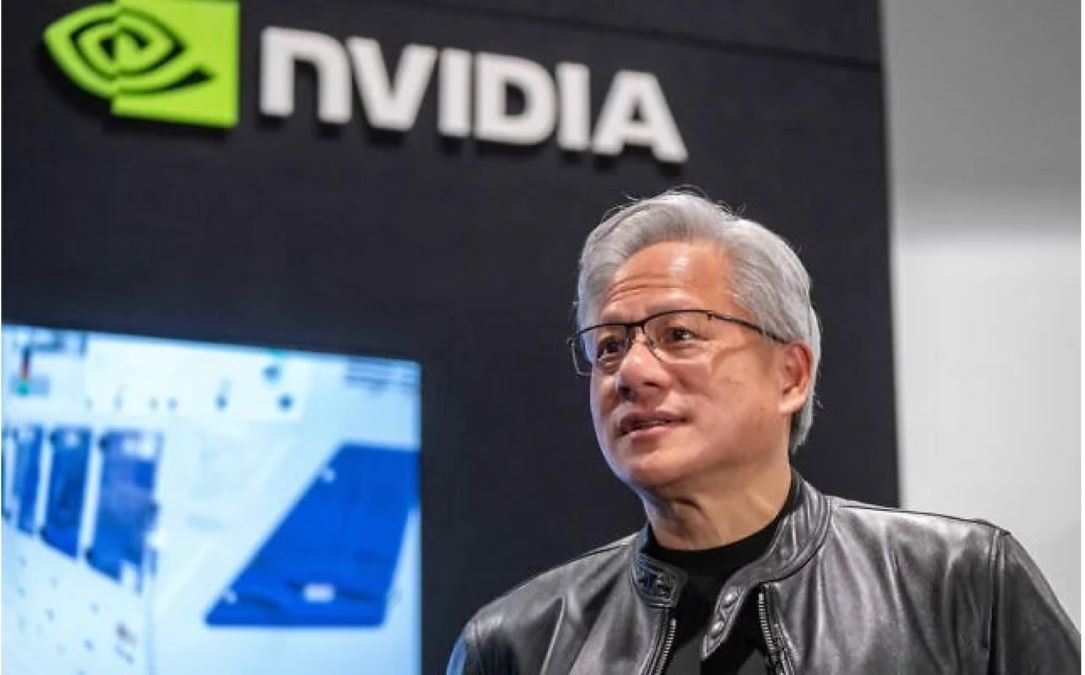
The dramatic return of Jensen Huang as chief executive of Nvidia, following an intervention by US President Donald Trump, has brought into sharp focus a question that extends well beyond the fortunes of one technology company: can extraordinary corporate achievement become a justification for extraordinary personal power, and can the importance of a business to national interests override the principles of corporate accountability?
The controversy began with Huang's resignation following revelations about his personal relationships, including an alleged affair with a Chinese businesswoman suspected of having links with Chinese intelligence. The circumstances raised questions not merely about personal conduct but also about possible security vulnerabilities and the company's compliance with American restrictions on advanced semiconductor exports. The Nvidia board initially accepted his resignation, citing conduct inconsistent with its code of conduct. It subsequently reversed its decision and reinstated him, following discussions with Huang and inputs from senior US government officials. Trump openly acknowledged that he had personally persuaded the board.
There is, however, another side to this episode which deserves consideration. Huang is not an interchangeable corporate executive. He founded Nvidia in 1993 and, over three decades, transformed it from a graphics-chip manufacturer into arguably the most consequential company in the global artificial intelligence ecosystem. Its processors have become indispensable to the development of advanced AI models, data centres and computing infrastructure. His understanding of technology, extraordinary entrepreneurial instinct and capacity to anticipate the direction of the industry have made him central to Nvidia's success. His departure consequently threatened to unsettle not just the company's investors but an entire ecosystem of technology businesses, research institutions and strategic partnerships.
The response from employees, investors and several prominent technology leaders was therefore not entirely surprising. A campaign demanding his reinstatement gathered considerable support, with its proponents arguing that he deserved due process and that the board should not confuse allegations with established wrongdoing. The sharp recovery in Nvidia's shares following his return, reportedly adding nearly a trillion dollars to its market value, demonstrated the extraordinary premium investors place on his leadership. There is a reasonable commercial argument, therefore, for retaining a leader whose contribution to the company's success is difficult to replicate.
But commercial pragmatism cannot be the only consideration. A board of directors exists precisely to ensure that the interests of a company and its shareholders are not made entirely dependent on one individual. Its responsibility is not simply to recognise exceptional talent but also to exercise independent judgement, enforce institutional standards and protect the organisation against risks arising from excessive concentration of authority. Nvidia's abrupt reversal, particularly before its independent investigation had concluded, has inevitably raised questions about the board's credibility. The fact that the President of the United States intervened makes those questions even more consequential.
Trump's intervention, however, cannot be understood merely as an exercise in political favouritism. Nvidia occupies a position of extraordinary importance in America's technological competition with China. Advanced semiconductors are now strategic assets, as important to the emerging economic order as energy and industrial capacity were to earlier generations. Washington has an entirely legitimate interest in ensuring American technological leadership. It may also have concluded that retaining Huang was preferable to allowing uncertainty at the head of a company so central to that objective. Yet the distinction between protecting a national strategic asset and intervening in the internal governance of a private corporation must remain clear. Otherwise, economic importance can become a convenient justification for political patronage.
The more immediate challenge is to establish what actually happened. The allegations concerning possible Chinese intelligence links and the diversion of advanced chips remain matters for investigation, not grounds for premature conclusions. Huang must be entitled to a fair hearing, just as Nvidia must be held responsible for any established failure of its compliance systems. The board has announced an independent investigation, a new committee on national security and export controls, and the appointment of a Chief Compliance Officer. These steps are welcome, but their effectiveness will depend on their independence and the seriousness with which they are pursued.
There is also a longer-term institutional lesson. Nvidia's extraordinary dependence on its founder raises questions about succession planning and the ability of its management and board to function independently of him. No enterprise, however successful, should become synonymous with a single individual. The history of business offers enough examples of brilliant founders whose personal dominance eventually became an institutional liability. The challenge is to preserve entrepreneurial genius without allowing it to displace corporate governance.
The coming months will be revealing. Congressional scrutiny, continuing investigations, questions about export controls and the relationship between the White House and Silicon Valley are unlikely to disappear merely because Huang has returned. His leadership will also be judged by whether he can restore confidence in the company's institutional processes and demonstrate that his personal authority is compatible with accountability.
Jensen Huang's return may well prove to be the commercially sensible decision. But the manner of his return has created a governance problem that the market's immediate enthusiasm cannot resolve. The real test is not whether America can protect its technological geniuses. It is whether it can do so without making them, or those who enjoy political favour, answerable to no one.
A successful company needs exceptional leadership. A durable institution needs something more: the ability to hold even its most exceptional leaders accountable.
(Uday Kumar Varma is an IAS officer. Retired as Secretary, Ministry of Information & Broadcasting)


Related Posts
Nvidia reinstates Jensen Huang as CEO amid affairs, spy scandal
Sheikh Hasina to return to Bangladesh on Dec 16, asks for state carrier
CBI secures return of Ukrainian fugitive from Romania