 Ira Singh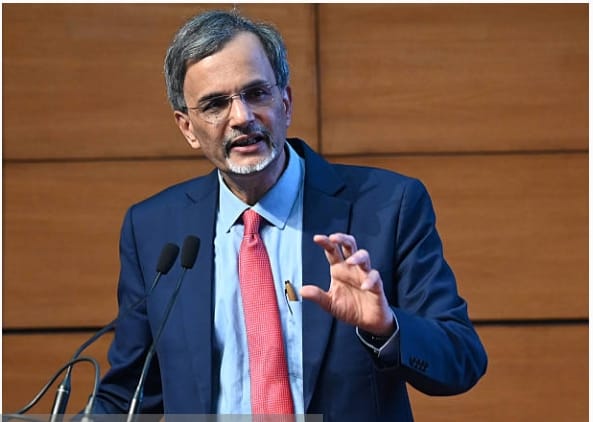
India's economy demonstrated remarkable resilience by growing 7.7% in FY2025-26 despite global uncertainties triggered by the US-Iran conflict, Chief Economic Advisor (CEA) V. Anantha Nageswaran said on Monday.
Speaking at a CII summit on Tamil Nadu's infrastructure, Nageswaran said India's continued position as the world's fastest-growing major economy highlights the strength of its economic fundamentals at a time when several global economists had lowered growth forecasts due to geopolitical tensions.He pointed to the country's robust GST collections of over Rs2.11 lakh crore in July as evidence that economic activity remained strong even during a period when concerns over disruptions to oil, gas, fertiliser supplies and worker remittances were high because of the conflict.
Nageswaran said India's resilience was backed by broad-based macroeconomic strength. Manufacturing expanded by over 10% despite global tariff barriers, inflation remained under control, foreign exchange reserves stayed close to $700 billion, and the rupee remained stable through calibrated management."This resilience is built, not accidental," he said, adding that India's economic strength has been reinforced through sustained policy measures over the past decade.Highlighting the government's infrastructure push, the CEA noted that the Centre's capital expenditure has increased from around Rs2.5 lakh crore seven to eight years ago to more than Rs12 lakh crore in the current Budget, creating a strong foundation for long-term growth. Nageswaran stated GST collections, strong manufacturing and stable macroeconomic indicators underscore India's resilience despite geopolitical tensions.
Nageswaran also cautioned against offering essential public services below cost, describing "free" as the "most expensive word in public policy." He noted that underpricing utilities such as water often benefits existing users rather than the poor, encourages waste, and weakens public finances. Instead, he advocated transparent pricing coupled with targeted support for vulnerable sections.He stressed that India's long-term growth would depend not only on investment in infrastructure but also on maintaining fiscal discipline, honouring contracts and ensuring sustainable pricing of public utilities.
(Business Correspondent)

Related Posts
6 silver medals,20 Medals for Excellence, India finishes 10th at WorldSkills
Asian Games 2026: Pincky Balhara clinches Kurash bronze for India
India retain Nona Gaprindashvili Trophy at Chess Olympiad