 Ira Singh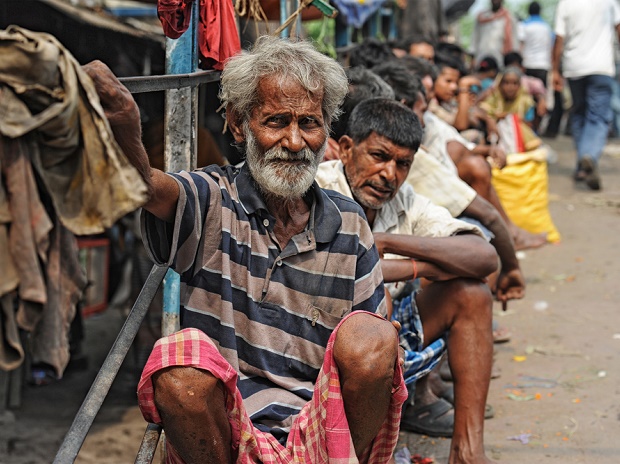
In a recent statement, the Chief Executive Officer of Niti Aayog, India's policy think tank, asserted that poverty levels in the country is now down to below 5%.This proclamation comes as a beacon of progress for the nation, marking a significant milestone in its socio-economic landscape. The assertion of poverty reduction to below 5% echoes the strides India has made in uplifting its citizens from destitution. It reflects concerted efforts by the government to implement policies aimed at socio- economic empowerment and inclusive growth. However, juxtaposed against this backdrop is the perplexing continuation of free cereal distribution by the government to two-thirds of the Indian populace, a practice initiated four years ago(,a program initiated in response to the dire need for food security among vulnerable sections of society)and slated to continue until 2029.
The question arises: if poverty levels are indeed as low as claimed, why does the government persist in providing free cereals? Poverty and inequality are intrinsically linked,a fact underscored by recent findings from the World Inequality Lab (WIL), a leading global research center. WIL's working study titled 'Income and Wealth Inequality in India, 1922-2023: The Rise of the Billionaire Raj' sheds light on the stark realities of economic stratification within the country.
The study's findings paint a sobering picture of the wealth gap, revealing a pronounced rise in inequality over the decades, culminating in the emergence of what is colloquially termed the 'Billionaire Raj.' Despite strides in poverty reduction, the concentration of wealth at the upper echelons of society underscores persistent disparities that belie simplistic narratives of progress.
When it comes to income inequality reportedly, 22.6% of India’s national income in 2022-23 went to the top 1%, the highest proportion in the last 100 years. For wealth inequality ,the share of the top 1% in wealth was as high as 40.1% in 2022-23, also its highest level since 1961. The share of wealth among the top 10% increased from 45% in 1961 to 65% in 2022-23. Conversely, the share of the bottom 50% and middle 40% in wealth has declined: The rich got richer and the poor got poorer.India’s wealth inequality is not as extreme as Brazil and South Africa, but its wealth concentration has already increased threefold between 1961 and 2023. Additionally, with India’s income inequality being the world’s highest, higher than South Africa, Brazil and the United States of America, it will only add to wealth inequality in times to come, believe experts.According to the WIL study, between 2014-15 and 2022-23, “the rise of top-end inequality has been particularly pronounced in terms of wealth concentration”, making India now more unequal than the British Raj.
Why Inequality Matters
In the recent years economists ,across the ideological spectrum, including conservatives, have sounded the alarm about the perils of growing inequality. Citing findings from recent International Monetary Fund (IMF) studies, concerns have been raised regarding the detrimental effects of income inequality on economic growth and its sustainability.
One notable IMF study highlights an inverse relationship between the income share of the rich and subsequent economic growth. Specifically, it reveals that if the income share of the top 20% of the population increases by just 1 percentage point, GDP growth is projected to decrease by 0.08 percentage points over the following five years. This suggests that the purported benefits of economic prosperity do not trickle down as anticipated. Conversely, a similar increase in the income share of the bottom 20% is associated with a noteworthy 0.38 percentage points higher growth.
The adverse impact of inequality on growth is important to consider, as growth is critical to the reduction of poverty; the greater the inequality, the lower the impact of growth on poverty reduction.Second,the literature also establishes that the super- rich affect decisions by being in and out of the corridors of power.
The recent electoral bonds incident have demonstrated what was always known — that the super-rich are influencing decisions, leading to the exclusion of others from competition and undermining social impact and environmental impact decisions — thus undermining citizens’ rights.Also, inequality dampens investment, and hence growth, by fueling economic and political instability.
Besides, the growing power of the elite poses a significant threat to the provision of public goods essential for productivity, growth, and equity in India. Addressing this challenge requires concerted efforts to rebalance power dynamics and prioritize the needs of marginalized communities in policymaking and resource allocation processes. Investments in public goods must be guided by principles of equity and inclusivity, ensuring that the benefits accrue to all segments of society, particularly the most vulnerable.
In light of these insights devising policies that foster inclusive growth, uplift the most marginalized segments of society, and mitigate the corrosive effects of widening income disparities,remains crucial task for the policymakers. This may entail measures such as progressive taxation, investments in education and healthcare, and initiatives to promote fair wages and employment opportunities for all.
(Ira Singh, Asstt Editor, Gandhinagar)









Related Items
China expels PLA commander who led troops against India in Doklam, Galwan
Hockey India announces Rs 50 lakh cash reward for women's team
106 Maharashtra tourists stranded in Nepal return safely to India