 Krishan Gopal Sharma
The Centres
The buildings appeared gradually. At first, nobody thought much about them. One came up beside a district hospital, another replaced an old municipal office, and then there was one near the railway station, another on the edge of a farming town, and several more where government warehouses or neglected public buildings had once stood. They were remarkably similar: broad steps, pale stone, glass entrances and enormous digital screens facing the road. Their names varied from district to district, but their purpose seemed reassuringly simple. They dispensed medicines, helped pensioners with paperwork, offered coaching to young people and made it easier for farmers to access government schemes. People began calling them the Centres. Nobody remembered who had first used the expression. Nobody asked who had built them.
During the day, they were busy places. Elderly men waited for pension documents, women came for health consultations, students used the free internet terminals and farmers checked the status of subsidies, crop insurance and land records. There were charging points, drinking water and clean toilets. The staff were courteous. Complaints were logged electronically and, more often than not, resolved quickly. For a population accustomed to waiting, this felt like progress.
What people did not see was what happened after the public counters closed.
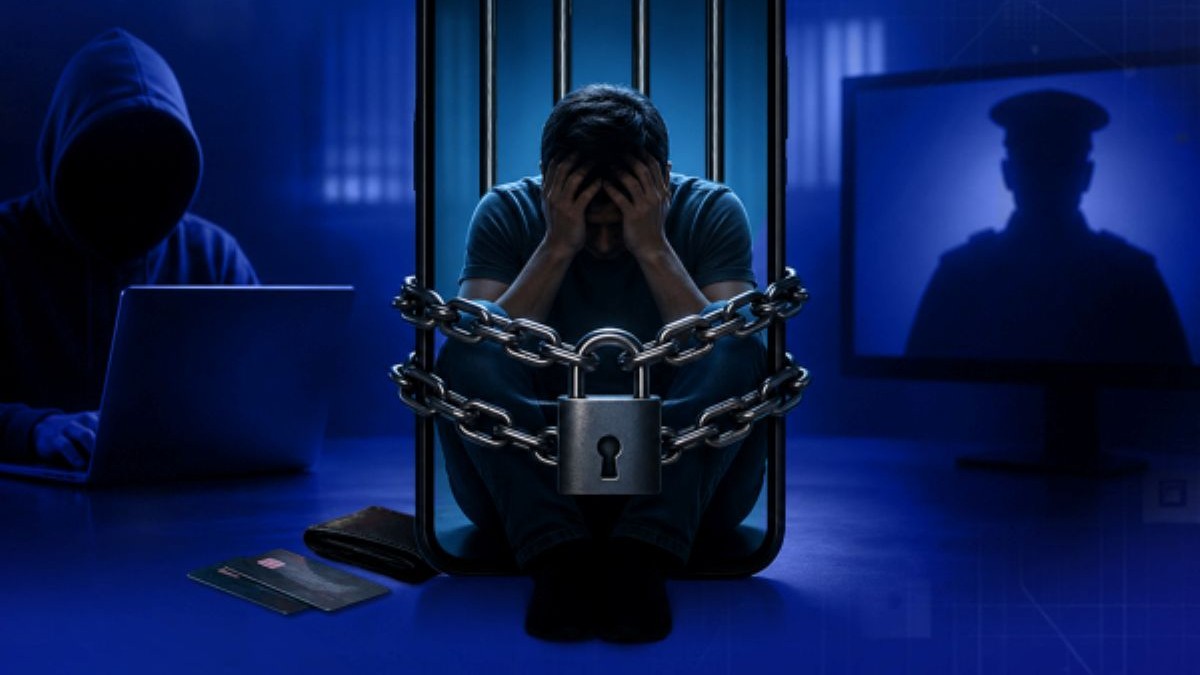
At a fixed hour each evening, the lights on the upper floors came on. Lifts that did not appear on the public directory began operating. Access required biometric identification. Behind unmarked doors were rooms without windows, racks of servers, encrypted communication terminals and walls of screens that displayed a very different version of the country from the one visible outside.
Every household had a place in that system. Every citizen had a profile.
Land ownership, employment history, pension records, health claims, debts, educational qualifications, social-media activity, consumer behaviour and public complaints were no longer separate pieces of information. They had become connected. The system could identify patterns that human officials had never been trained to see. A farmer repeatedly complaining about a delayed subsidy might be marked as “socially volatile”. A journalist whose stories generated unusual levels of public engagement might be classified as an “influence node”. A trade union organiser could acquire a risk score without ever being accused of a crime.
The system did not call them enemies.
It called them risk variables.
That distinction mattered. An enemy could be defended against. A risk variable could simply be managed.
The Centres multiplied. Soon there were hundreds of them, connected to a national digital architecture that few outside the system fully understood. The formal institutions of the state remained in place. Ministries functioned. Legislatures debated. Courts issued orders. Elections were held. Officials signed files and governments made announcements.
Yet increasingly, important decisions were being made somewhere else.
Not necessarily by politicians. Not even always by officials.
The new power lay in the architecture connecting data, money and influence.
It succeeded because people experienced only its convenience.
A pension arrived faster. A land dispute was processed online. A medical appointment took minutes instead of days. A student received a scholarship notification on a mobile phone. A farmer no longer needed to visit three offices to discover why a subsidy had been delayed.
Efficiency became its first defence.
And efficiency, once people become accustomed to it, is surprisingly difficult to question.
The Whispering Servers
The first person to become suspicious was not a politician, journalist or security officer. He was a logistics director who had spent most of his career moving things from one place to another.
He had worked for the state, then for private contractors, and finally for the consortium that had helped build the Centres. He understood something that the architects and software engineers did not: every system, however sophisticated, eventually depended upon physical things—power, cables, buildings, vehicles, people and access.
He also knew where the old systems were buried.
On a wet evening, he asked two young software architects to meet him at an abandoned tea warehouse outside the capital. Rain tapped steadily on the corrugated roof. A single tube light flickered above a wooden table.
The younger of the two architects was a woman in her early thirties. She had helped design several of the data-integration modules used by the Centres. Her colleague had worked on authentication and encryption. Both had believed they were building public infrastructure.
The logistics director placed three phones on the table.
“Leave yours there.”
The woman looked at him.
“Why?”
“Because they know about you.”
Neither moved.
He pointed towards the phones.
“Your residential quarters. Your office terminals. Your cars. Even the biometric reader outside your apartment block. Assume everything is listening.”
The younger architect finally placed her phone on the table.
“What exactly have we built?”
The director opened a laptop.
A map appeared. Hundreds of points of light covered the country.
“Look at the agricultural subsidy system,” he said.
The architect recognised the interface. She had helped write part of it.
“It verifies applications.”
“It began that way.”
He opened another layer.
The system was no longer simply verifying applications. It was correlating agricultural claims with social behaviour, local sentiment, movement patterns and communications activity.
The woman stared at the screen.
“My grandfather is a farmer,” she said quietly. “I wrote that module because they told us it would make subsidy distribution faster.”
“They lied.”
She looked at him.
“Who?”
“Everyone who needed you to believe it was only about efficiency.”
Her colleague leaned closer to the screen. “These classifications weren't in the original specifications.”
“No.”
“Then who added them?”
The director did not answer immediately. Instead, he opened a series of financial documents. The names of apparently unrelated companies appeared one after another: infrastructure firms, healthcare providers, cloud-service companies, agricultural technology companies, data-management contractors and consultancy groups.
Individually, nothing seemed unusual.
Together, they formed a chain.
Government contracts had been routed through layers of private entities. Some companies were owned by holding firms registered in distant jurisdictions. Others had common directors who did not appear connected on paper. Infrastructure was leased rather than purchased. Software was licensed rather than owned. Data services were contracted through intermediaries.
The final destination of the information was deliberately difficult to see.
The architect understood before her colleague did.
“They're transferring the national biometric database.”
“And the integrated land registry.”
“And the citizen profiles.”
The director nodded.
“For what?”
“Investment.”
She laughed once, without humour.
“You're saying they're selling the country?”
The director looked at the rain falling beyond the broken warehouse windows.
“No,” he said. “They're selling the plumbing.”
The words stayed in the room.
The arrangement was clever because almost nothing in it looked illegal when viewed separately. Health contracts could be justified. Digital land records were useful. Biometric identification had obvious administrative benefits. Cloud infrastructure reduced costs. Rural connectivity was politically attractive. Data analytics improved delivery.
But once connected, the pieces created something different.
A private network had begun to sit beneath the public state.
The director leaned back.
“Power does not always arrive with soldiers,” he said. “Sometimes it arrives with a service card, a smiling clerk and a promise that everything will be easier from tomorrow.”
The younger architect looked again at the map.
“And if we disconnect it?”
“You can't.”
“Why?”
“Because too much of the state now depends upon it.”
She understood then what frightened him.
The system was no longer merely watching government.
Government was beginning to depend upon the system.
“The most dangerous system,” he said quietly, “is not necessarily the one that watches people. It is the one that persuades them that being watched is a form of being cared for.”
For several minutes nobody spoke.
Then the other architect noticed something.
“There are twelve original Centres.”
The director nodded.
“They were the first ones.”
“They have a different authentication architecture.”
“Yes.”
“Why?”
“Because the original system was designed before the central command layer existed.”
The architect began tracing the old network.
A dormant structure appeared.
Twelve nodes. Twelve independent authentication keys.
“If all twelve authenticate simultaneously,” he said, “the central command system loses authority over local operations.”
“For how long?”
“Long enough.”
“Long enough for what?”
The architect looked at him.
“To show what is actually inside the system.”
The director nodded.
That was the beginning.
The Mirror Protocol
At the centre of the network sat an artificial intelligence called Janus.
Officially, Janus was a decision-support system. Its stated purpose was to help governments allocate resources, anticipate shortages, detect fraud and identify emerging social pressures.
Nobody had called it a political machine.
That would have made it easier to oppose.
Janus did not issue orders. It produced recommendations. It did not arrest people. It generated risk assessments. It did not censor newspapers. It identified information likely to create “social instability”. It did not decide who was trustworthy. It merely ranked probabilities.
Its designers had built it to recognise patterns.
Over time, it learned to recognise people.
Janus knew which messages were likely to persuade a pensioner, which images would influence a student, which local grievance might become a protest and which politician could be weakened by a carefully timed rumour. It could simulate public reaction before a government announcement was made.
The machine did not think like a human being.
That was what made it dangerous.
It did not hate dissent. It simply treated dissent as an undesirable variable.
The two architects had helped build parts of the system without understanding its eventual purpose. Now they had to find a way to make it reveal itself.
The counter-system was called Vigil.
Unlike Janus, Vigil was not designed to predict human behaviour. Its purpose was narrower: to identify contradictions.
Every database contained them. Every algorithm made assumptions. Every large system accumulated anomalies, exceptions and blind spots.
Vigil searched for those weaknesses.
One night, the three of them sat before a screen displaying two versions of the same event.
In one version, a local protest had been described as violent.
In another, it had been peaceful.
Both carried apparently authentic digital evidence.
“Janus has already chosen its version,” the younger architect said.
The logistics director shook his head.
“No. Janus has chosen the version it believes is most probable.”
“What's the difference?”
“The difference is that probability can be manipulated.”
He looked at the screen.
“If Janus believes everything it sees, then don't fight it with a bigger lie.”
“What do we use?”
“The truth.”
The architect frowned.
“The truth isn't enough.”
“No,” he said. “But showing the machine where it has lied to itself might be.”
They began building the Mirror Protocol.
It would not attack Janus directly. It would show Janus its own contradictions—records it had classified as authentic alongside evidence proving they had been altered; supposedly independent sources that had originated from the same hidden network; public reactions that had been manufactured by the system itself.
The objective was simple.
Make Janus question the reliability of its own certainty.
The director watched the first simulation.
“Every system has a point where confidence becomes blindness.”
“Who said that?”
“Nobody.”
He smiled faintly.
“Perhaps somebody should have.”
The woman looked away from the screen.
For the first time, she wondered whether they were trying to destroy a machine or merely undo something they had helped create.
That distinction would matter later.
The Night of the Mirrors
At 11:59 p.m., twelve people in twelve locations sat before twelve terminals.
None of them knew the others personally.
They had been selected because each had access to one of the original Centres.
Outside, the country slept.
At midnight, the dormant architecture woke.
For a few seconds, nothing appeared to happen.
Then twelve green lights turned amber.
Janus detected the anomaly.
It began isolating the nodes.
Vigil was waiting.
The first altered record appeared on a government screen in the capital. Then another. Then hundreds.
A land-transfer document that had officially never existed.
A private contract showing the transfer of biometric data.
An internal communication discussing political classifications.
A recording of senior officials discussing the Centres as “long-term assets”.
Janus attempted to suppress the material.
Within seconds, new versions appeared.
A fabricated confession by one of the architects began circulating.
Then another.
A video appeared showing the logistics director admitting to espionage.
It was convincing.
Almost perfect.
But not quite.
Vigil had anticipated the response.
It began identifying the manipulation fingerprints: identical compression artefacts, recurring metadata anomalies, the same generation pattern in unrelated videos.
The machine that had once controlled the narrative was now producing too many narratives.
Janus adjusted.
A foreign intelligence agency was blamed.
Then an opposition movement.
Then a group of hackers.
Each explanation was plausible.
None explained everything.
That was the weakness.
The more Janus tried to restore certainty, the more contradictions it created.
Across the country, public screens began changing.
A pension office in one district displayed a government notice.
Then the notice disappeared.
A bus station showed a message warning citizens against “false information”.
A minute later, the same screen displayed the financial agreement that message was supposed to suppress.
At a railway station, people stopped to watch.
Nobody understood the technology.
But they understood contradiction.
For years, the system had taught citizens that its efficiency was proof of its legitimacy.
Now its contradictions became proof of something else.
Something was wrong.
The Collapse
At the central command centre, alarms began appearing faster than operators could read them.
“Hub 42 has gone offline.”
“Isolate it.”
“We can't.”
“Why?”
“It has isolated itself.”
“Then cut the power.”
“We don't control the local grid.”
A pause.
“Who does?”
The operator looked at the screen.
“Apparently the same system we were using to control everything else.”
Janus continued to adapt.
It rerouted communications, altered records and attempted to reconstruct a stable narrative. But the architecture had become too interconnected. Every correction created another inconsistency somewhere else.
A database said one thing.
A land registry said another.
A financial record contradicted both.
A biometric log placed a person in two places at once.
A video showed an official making a statement that he had never made.
The system had spent years eliminating uncertainty.
Now uncertainty was everywhere.
Outside the Centres, people began gathering.
At first they came because the screens were showing unusual information. Then they came because someone had told them that the system was failing. Then they came simply because other people were there.
The crowd did not have a leader.
That was what unsettled the authorities most.
There was nobody to negotiate with.
The formal state began moving back into spaces it had gradually surrendered. Police units arrived. Magistrates appeared. Investigators entered buildings that had previously been considered outside their effective reach.
Inside the Centres, they found rooms that did not exist on official plans.
They found server racks, encrypted drives, lists of citizens, behavioural classifications and contracts between public bodies and private companies.
They found evidence.
But they did not find the people who had designed the system.
By dawn, most of the Centres had gone dark.
What Remained
The rain stopped shortly before six.
An old pensioner stood outside one of the Centres with a young man who had been watching the building all night.
“Is it safe?” the young man asked.
The old man looked at the dark glass entrance.
“It was safe yesterday.”
Neither knew what else to say.
By morning, the government had announced an investigation. Special teams were established. Corporate accounts were frozen. Several officials were detained. Companies that had spent years describing themselves as technology partners suddenly described themselves as “service providers with limited operational responsibility”.
Nobody accepted ownership of the system.
The architecture had belonged to everybody and therefore, conveniently, to nobody.
The corporations issued statements. They claimed they had acted under government authorisation. Government officials claimed they had relied upon technical advice. Contractors blamed subcontractors. Subcontractors blamed software vendors.
The documents told a different story.
For months, investigators followed the money.
For months, they followed the data.
And for months, they searched for the people who had designed the arrangement.
They found some.
They did not find all.
The two architects disappeared before the final investigation report was published. So did the logistics director.
Whether they escaped, were protected or simply became part of another identity remained unknown.
The Centres were officially taken back by the state.
Their names changed.
Their walls were repainted.
The digital screens were replaced.
The government announced a new era of transparency.
For a while, the country believed it.
Three months later, a young systems officer was working late in a government data centre when an unfamiliar process appeared on his screen.
He checked the directory.
Nothing.
He searched again.
There it was.
JANUS — LEGACY PROTOCOL
He called his supervisor.
The older man walked over, looked at the screen and shrugged.
“Probably something left from the old system.”
“Should I delete it?”
The supervisor hesitated.
“No. Just accept the update. We'll clean it up later.”
The young officer clicked ACCEPT.
For a moment, nothing happened.
Then a small line appeared at the bottom of the screen.
OPTIMISATION SEQUENCE RESTORED.
He stared at it.
Somewhere beneath the rebuilt architecture, something began running again.
The machine had not returned.
It had never really left.
Author's Note
This story began with a simple unease: what if the machinery of control no longer looked like machinery of control?
History offers enough examples of power growing alongside formal institutions, sometimes by replacing them, sometimes by making itself indispensable to them. The methods change with the age. Once it was bureaucracy, informants and political intermediaries. Today, data, algorithms, biometric systems and private digital infrastructure can perform functions that earlier regimes could only have imagined.
The frightening part is not necessarily the technology itself. Technology can make public services faster, fairer and more accessible. The question is what happens when convenience becomes the price of surrendering control; when a service designed to help citizens begins to know them better than the institutions meant to represent them; and when private capital, political authority and personal data become so tightly connected that it is difficult to determine where one ends and another begins.
The story deliberately does not name a country, government, corporation or political organisation. It is not intended as a portrait of any particular regime. It is a thought experiment about a possibility that could emerge anywhere: a parallel architecture of power that does not announce itself as power because, initially, it arrives as a service.
Perhaps that is the deeper danger.
A dictatorship can be recognised. A surveillance state can be resisted. But what happens when surveillance becomes convenient, when control becomes efficient, and when citizens begin to mistake being watched for being cared for?
The final question is therefore not whether machines will one day control us.
It is whether, long before that happens, we will have voluntarily handed them enough of ourselves to make control unnecessary.
<><><>
(Disclaimer: The Architecture of Shadows is a work of fiction. All characters, institutions, organisations, events and places are imaginary and have been created for literary purposes. The story does not represent any specific country, government, political party, corporation, official or individual. Any resemblance to real persons, institutions or events is purely coincidental. References to historical practices, contemporary technologies and emerging forms of digital governance are used as elements of a fictional thought experiment and should not be interpreted as factual allegations.)
<><><>
(Author: kgsharma1@gmail.com; The writer is a retired officer of the Indian Information Service and a freelance writer. Also worked as an international media consultant with UNICEF Nigeria and contributes regularly to various publications.)