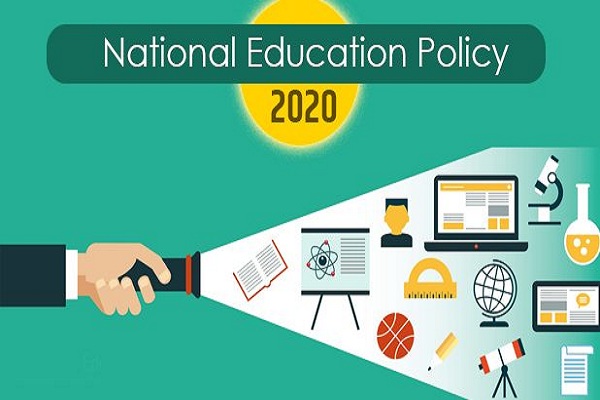
The National Education Policy 2020, which provides a framework and a set of guidelines for education-related decisions and endeavors of the government has stirred up discussions, and elicited hopes and aspirations for catalyzing a big change in the current Indian education system.
The third educational policy of India released effectively after a gap of 34 years of the previous policy of 1986 (which was amended a little in 1992), aims to radically revise and redesign the structure of Indian education to make it more dynamic, flexible, relevant and effective, by proposing key reforms that if implemented successfully, can lay down a solid foundation for the future. The most positive aspect of the policy is that it offers bold perspectives and objectives to advance the Indian education system, and free it from a neglected and complex mesh of rules and processes that have failed to adapt to the everchanging, disruptive world of talent and technology. It has identified the lacunae in the current education system that relied heavily on rote learning and was criticized for limiting the creativity of the learners.
The policy, which has been compiled from the NEP draft of 2019, with suggestions from various stakeholders and education experts is path-breaking of sorts. It is not just about the financial investment in education; it is about the hope of development of a robust and relevant system to replace the ruptured and rusty one, that may be possible only if the government can implement on the ground, what it has promised on paper.
While the media, both print and social, is already replete with debates involving both its proponents and opponents, I will analyze this policy from an objective lens to chart out the challenges as well as the opportunities that present themselves at this juncture, and argue how it can be a potential turning point that can make or break the future of the Indian education system.
Critical Strengths
- Multidisciplinary Education and Autonomy
With guidelines to integrate various disciplines by promoting interdisciplinary studies and research, Higher Education Institutions and professional education institutions will evolve into holistic organizations providing opportunities to learn diverse fields, through various interdisciplinary and optional courses, thus demarking rigid boundaries between the so-called streams. It is an essential step to promote application-based studies and exploring new avenues in interdisciplinary/exotic fields. The most important element in this is the autonomy, both in letter and spirit, that is being promised to good HEIs, for it is this element that would give them the opportunity to become truly world class. For instance, allowing IIMs and IITs to launch contextual world class programmes, define and create degrees and diplomas in physical, online and blended modes, and pursue independent research, are steps that are needed to unshackle higher education.
- The Academic Bank of Credit
This can be a game changer particularly in promoting higher education. The current degree programs are of long durations, especially professional courses like Engineering, Management, and Law, and many students drop out midway due to financial or personal reasons. The new guidelines propose a novel solution to encourage students to complete their degrees by allowing academic gaps through a system of credit allocation. According to this system, the undergraduate courses would be of four-year duration (including some non-professional courses) and in case of drop out from the course in one year, a certificate will be awarded, after second year a diploma, after third year a degree will be awarded and the credits earned will be recorded to facilitate completion of the course later. Thus, due credits will be awarded for the time devoted by a student to a degree course. Even post-graduation constraints and Ph.D. courses would be made more attractive by easing up the constraints.
- Promoting Research
The setting up of the National Research Foundation, ramping up degree courses to provide research experience and guidelines to set up research facilities in all Higher Education Institutions can prove to be steps that can provide a major boost to research and contribute towards creating research and innovation-based learning ecosystem.
- Building Strong Foundation
The 10+2 school education system would be replaced by a 5+3+3+4 curricular structure with a 5-year foundational stage, 3 years preparatory and middle stages respectively, and four years of secondary stage. The middle stage pedagogy will focus on experimental learning while the second stage will have pedagogical features like the choice of optional subjects from diverse disciplines. The foundational stage will streamline pre-school years by providing pedagogical guidelines and assistance, with no formal assessment.
- Internship and Vocational Learning
The middle stage school education will have 10 days allotted in every academic session as bagless days during which every student would learn and have practical hands-on training on vocations like Pottery, Carpentry etc., conducted by practitioners, thus encouraging internship during school and helping in the all-round development of students. School students will also be trained in basic coding skills.
At this point it would be worthwhile to clear some of the misconceptions surrounding the very strengths of NEP 2020 that I have laid out earlier. The social media was rife with arguments that NEP promotes child labour. It should be understood that focus on vocational skills is not tantamount to child labour. Internships are a great source of learning as pure experimental learning cannot happen in classrooms, and linking this to child labor is downright bizarre.
Another misconception that seems to be around is that education will become expensive. With the new policy allowing top 100 foreign Universities to set up their campuses in India, it is being concluded that the competition in the sector would lead to education becoming expensive and out-of-reach for marginalized communities. This seems to be a misplaced apprehension because competition would more likely lead to upscaling of quality of higher education, while reducing cost structures due to increase in participant numbers. However, it would be critical to have a regulatory framework in place for foreign universities, while the Indian institutions will need to self-regulate and have a transparent fee structure.
Some people are skeptical about the academic credit bank, arguing that it would lead to an increased dropout rate in higher education. On the contrary, it has been brought in, in the first place, to encourage students who had dropped out earlier, to continue their education even after a gap. Moreover, most students do not drop out at will but do so due to constraints. It would also allow students who feel 'caught up' in the wrong course, in accordance with their interests, to switch to a suitable course without losing much time.
Opportunities Ahead
1. Bridging the Skill Gap
The future of work would require a diverse skill set from the aspirants. Thus, multidisciplinary education and internship & vocational training can help in narrowing the Industry-Academia skill gap.
2. Leveraging emerging technologies
The setting up of the National Educational Technology Forum can boost the efforts to leverage technology in improving various aspects of education.
3. Improving Quality
Allowing top foreign universities to set up campuses and constituting bodies that would focus on the measurement of learning outcomes, can have a positive impact on the efforts for quality enhancement.
4. Light-but-Tight Regulations
The merging of UGC and AICTE into a single umbrella regulatory institution with dedicated departments for regulatory, accreditation, and grants functions, can be an effective step towards the simplification of the complex web of multiple regulatory policies.
Confronting the Challenges
The NEP 2020 may be praised for its vision, but turning a vision into reality is easier said than done. There could be many roadblocks in the journey for its proper implementation, and it would be useful to anticipate and address them.
1. Lack of planning
While the policy expresses its commitment to improving the quality of education, through an increase in expenditure, there is no clear roadmap mentioned. It is to be noted that 6% of the GDP spend target had been set way back in 1964, but still, it has not been achieved. India ranks 62nd in terms of expenditure on education, thus realizing the goal would need extensive planning.
2. Teacher Training
Although the policy has mentioned teacher training initiatives, but still the area has not received its due attention in the policy. It is of prime importance to develop teachers to make the system work, and an explicit plan needs to be outlined to achieve it.
3. Evolution of Evaluation
While assessments in schools have been reformed, the evaluation for entry into graduation courses still relies on competitive exams that test only concepts but not the skills or inclination for the course.
4. The language gap
Although the policy allows learning in regional languages in school, the gap between English and non-English learners could widen and the non-English learners could be at risk of being considered for inferior employment opportunities. This needs to be thoroughly examined and addressed.
5. Contextual Courses
While multidisciplinary courses have been promoted, the relevant courses in the current social context like gender studies, cross-cultural studies, and studies in ethics and ecology have not received their due importance.
Wrapping up, the Education Policy is full of potential but it can be effective only when what has been promised is achieved in reality. Thus, proper planning and careful implementation while managing the constraints, is the crucial part, that can make all the difference. We have the opportunity to put India back on the world map and we must not let it pass.
(Writer is the Director, IIM, Indore)








Related Items
PART IV: The Second Dawn
'ISRO at the Dawn of a New Space Era': Chairman Dr. V. Narayanan
Historic Budget reflects aspirations of 140 crore Indians: PM Modi