 Uday Kumar Varma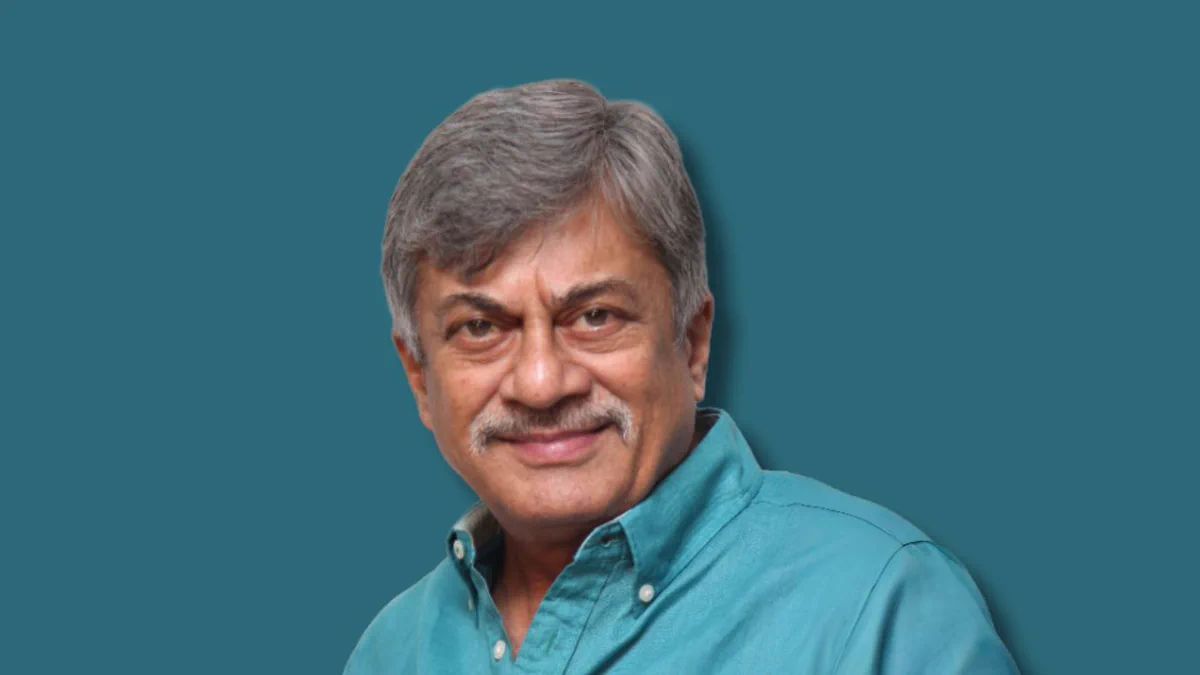
Some actors enter our lives through films. A few somehow enter our memories and stay there, long after the film itself has faded. Anant Nag has been one of those actors for me. I have never met him. Yet the news that he is to receive the Dadasaheb Phalke Award for 2024 made me feel that I had known something of him for a very long time.
Perhaps that is what great acting can do.
My association with cinema has not been entirely that of a spectator. As Secretary, Information and Broadcasting, films and the film industry were part of my official responsibilities. I had the opportunity to organise and participate in National and international film festivals and, over the years, to keep abreast of the work of many of the important actors, directors and other practitioners of Indian cinema. I was also associated, at one stage, with the process of selecting recipients of the Dadasaheb Phalke Award.
So I have some professional familiarity with the world in which Anant Nag has spent more than five decades. But my admiration for him is not professional. It is personal.
He has acted in more than 300 films in Kannada, Hindi, Telugu, Malayalam, Tamil and Marathi. The sheer range is impressive, but numbers do not explain Anant Nag. What does, perhaps, is the remarkable naturalness with which he inhabited his characters. He never seemed to be imposing himself upon a role. He seemed to disappear into it. The actor was there, of course, but quietly, almost unobtrusively, allowing the character to live.
I first encountered him in Hindi cinema through Ankur, Shyam Benegal's remarkable 1974 film. But the performance of his that has stayed with me most intimately was in a film whose name I could not recall for years. I remembered the actor, the drought, the troubled district and the dilemma of an administrator trying to do his duty in circumstances where duty itself becomes complicated. I now know that the film was Bara, M. S. Sathyu's 1982 Kannada film, based on U. R. Ananthamurthy's work, and that its Hindi version was called Sookha.
Anant Nag played Satish Chandra, the conscientious Deputy Commissioner of a drought-stricken district, struggling to secure recognition and relief for his people while negotiating the pressures of politics and bureaucracy.
That performance touched a very private chord in me. I had myself served as a Collector. The district administration is an unusual world: it brings one close to human suffering, but also places one between the suffering citizen and the many layers of authority, procedure and political expectation that stand between need and relief. Watching Anant Nag in Bara, I felt that he understood that loneliness of responsibility.
It was not a spectacular performance. That was precisely its strength. There was no theatricality, no heroic posturing. There was simply a man trying to do what he believed was right. Perhaps I recognised something of the Collector's world because I had lived in it myself.
And then there was Malgudi Days. For an entire generation of television viewers, the little world created from R. K. Narayan's stories became almost a part of childhood. The fact that the serial was directed by Anant Nag's younger brother, Shankar Nag, gives that memory an added poignancy. Anant's presence in it, most memorably as Jagan, helped give Malgudi some of its gentle, slightly wistful humanity. This year, as it happens, marks forty years of the serial.
There was a life beyond cinema too. Like some of the great actors of southern India, Anant Nag entered public life, serving in the Karnataka Legislative Council and later the Legislative Assembly, and becoming a minister. But it is his artistic journey that I find most compelling.
The selection committee has described his career as one that “inspired generations of artists and enriched the cultural landscape of the nation.” It is an official formulation, and therefore perhaps necessarily grand. Yet in Anant Nag's case, it does not seem excessive. More than three hundred films, six languages, more than five decades of work, and characters that have travelled across regions and generations — the words acquire a certain quiet credibility.
I should add one other, admittedly less scholarly, observation. I found Anant Nag immensely handsome. There was something distinctive about that face — not merely good looks, but an intelligence and gentleness that the camera seemed to discover rather than manufacture.
But handsome faces fade, as they must. Careers eventually become lists of films and awards. What remains is the memory of a performance, the feeling that a character was real, and the strange intimacy between an actor and someone sitting, years ago, on the other side of the screen.
I write about Anant Nag not because I knew him. I did not. I write because, somewhere between Ankur, Bara and Malgudi Days, an actor I never met left an impression on me that has endured. Perhaps that is the most enduring award an actor can receive.
(Uday Kumar Varma is an IAS officer. Retired as Secretary, Ministry of Information & Broadcasting)
Related Items
Marathi film ‘Gondhal’ is India’s pick for Oscars 2027
Veteran Kannada actor Anant Nag to receive Dadasaheb Phalke Award
Netaji row: WB govt strips BJP MP Anant Maharaj of state honour