 Newsinc24 Team
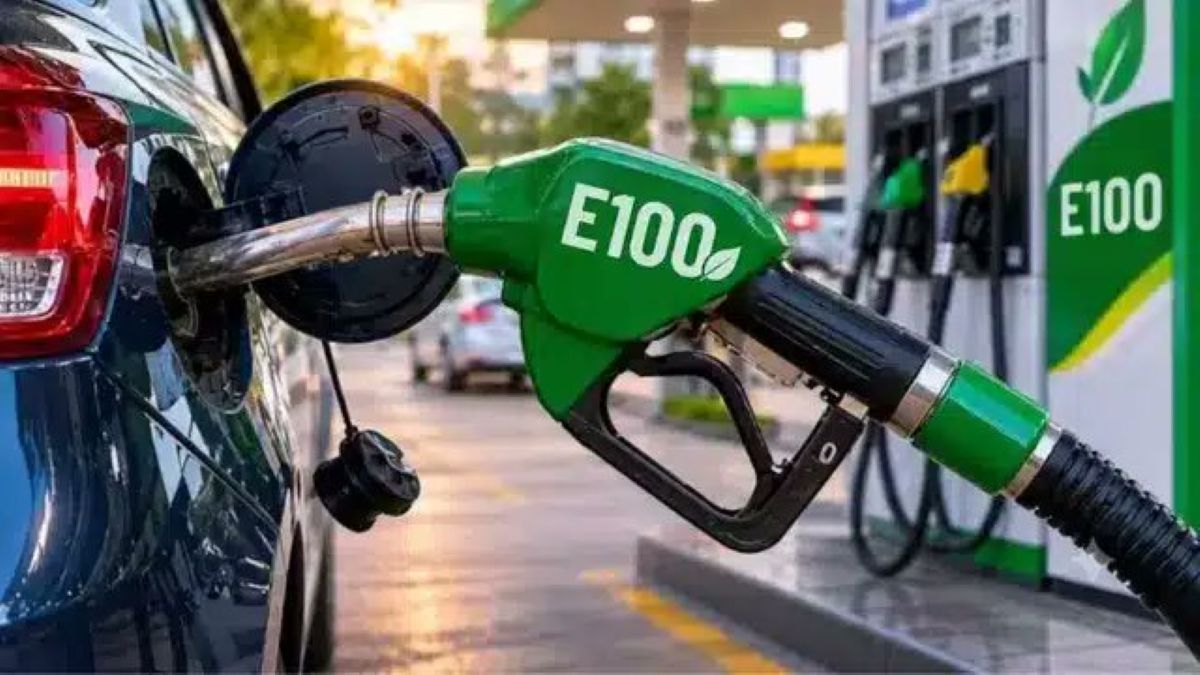
The Road Transport Ministry on Monday notified changes to the Central Motor Vehicles Rules, allowing flex-fuel vehicles that can run on up to E100. E100 fuel allows vehicles to run on nearly pure ethanol.The notification, issued on October 23 and published in the official gazette on October 26, comes into immediate effect. This follows draft rules published on April 27, after which the ministry reviewed public objections and suggestions before issuing the final notification.According to the notification, vehicles designed and certified for high-ethanol blends can use E85 and E100 fuels. Conventional petrol vehicles, including those running on the nationwide E20 blend (20% ethanol, 80% petrol), cannot operate on these higher blends without proper certification. The regulatory update creates a formal pathway for automakers, as several top car manufacturers prepare to launch E100-compatible flex-fuel vehicles in the Indian market to cut crude oil import dependency.
In June this year, Maruti Suzuki India launched India's first flex-fuel passenger vehicle, introducing Wagon R Flex Fuel capable of running on ethanol-petrol blends from E20 to E100.Major automakers, including Toyota Motor Corporation, Tata Motors and Hyundai Motor Company, are also developing flex-fuel vehicles for the Indian market as policymakers seek to reduce the country's fossil fuel import bill. In its explanatory Note the Ministry said, the flex-fuel technology can contribute to India's vision of Atmanirbhar Bharat by promoting indigenous fuel production.
Explanatory Note
Flex Fuel Vehicles
The Government has notified the regulation enabling the introduction of flex-fuel vehicles, designed to run on fuel between E20 [E(X) implies X% of ethanol in (100-X)% gasoline] and E85/E100. Flex-fuel technology is a proven and mature technology that has been deployed in countries such as Brazil and the United States.
Flex-fuel vehicles are specifically designed with fuel-system components and materials that are compatible with ethanol blends from E20 to E100. Vehicles designed as Flex fuel vehicles will not have material compatibility issues. Motorists should check the fuel compatibility sticker on their vehicle and follow the manufacturer's guidance in the owner's manual while opting for the fuel choice at the fuel station.
Advanced engine management systems automatically adjust vehicle operation according to the fuel composition, ensuring optimum performance under different driving conditions. The introduction of flex-fuel vehicles in India is expected to generate employment opportunities through the development, manufacturing, and supply of flex-fuel vehicle components, ethanol production infrastructure, and related services.
Ethanol has a lower fossil carbon footprint than conventional gasoline. The use of higher ethanol blends can help reduce tailpipe emissions of carbon monoxide (CO) and certain hydrocarbons (HC), while contributing to lower lifecycle greenhouse-gas emissions, depending on the feedstock and production pathway. Greater use of domestically produced ethanol can reduce dependence on imported crude oil.
The adoption of flex-fuel technology can contribute to India's vision of Atmanirbhar Bharat by promoting indigenous fuel production, enhancing energy security, and supporting the country's long-term goal of achieving net-zero emissions by 2070. With this vision, the Government of India is encouraging the deployment of flex-fuel vehicles across the country through this regulation.
Additionally, the government has raised the vehicle weight limit to 3,500 kg from the previous threshold of 3,000 kg for light petrol and diesel vehicles affected by these changes.



Related Posts
Personal advancement should fuel nation's progress, says PM Modi
Protests can serve political interests, fuel divisions: Mohan Bhagwat
Indian fuel exports to West surge 43% amid Russian crude flows